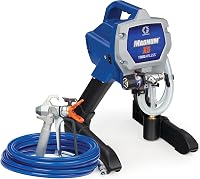
Water to Paint Ratio for a Paint Sprayer
There is no single water to paint ratio for every paint sprayer. Check the paint and sprayer instructions, then add water in small amounts only if thinning is allowed.
On this page (7 sections)
- What water to paint ratio should you use for a paint sprayer?
- How should you thin paint if the instructions allow it?
- How can you tell whether the paint is ready to spray?
- Which sprayer fits paint that needs thinning?
- What should you check before spraying walls or cabinets?
- What should you do if the paint still won't spray well?
- How do you choose the right water to paint ratio?
There is no single water to paint ratio for every paint sprayer. Check the paint label and sprayer manual, and thin only when both allow it.
If thinning is permitted, add water in small amounts, mix thoroughly, and test the paint on scrap material. The right mix depends on the paint, sprayer, nozzle, and the finish you need.
What water to paint ratio should you use for a paint sprayer?
Use the ratio in your paint label or sprayer manual; if neither gives one, don't guess a fixed ratio. Different paints and sprayer setups can need different preparation.
Some sprayers can spray certain latex paints unthinned. Others may require thinning, or may not be suited to that paint.
Our guide to what kind of paint works best in a sprayer explains how paint type and sprayer design affect the choice.
Water is generally used to thin water-based paint, but it can change coverage and finish. Don't add it to oil-based paint; use only the thinner named by the paint manufacturer.
How should you thin paint if the instructions allow it?
Start with a small, measured amount of water and test before adding more. That gives you a chance to check the spray without thinning the whole batch too far.
- Read the paint label and sprayer manual.
- Stir the paint until it's smooth.
- Pour a small amount into a clean container.
- Add a little water only if the instructions allow it.
- Mix thoroughly and test on scrap material.
- Add more water in small steps only if the test shows it is needed.
Keep track of how much water you add. If the paint becomes too thin, it may run or drip and may cover less well.
Should you use a viscosity cup?
Use a viscosity cup only if your sprayer's instructions specify one and give a target. A cup test can help compare how quickly paint flows, but it doesn't replace the maker's guidance for your paint and setup.
Follow the cup method and timing in the manual. Don't apply a target from another sprayer, paint, or online recipe.
How can you tell whether the paint is ready to spray?
Test for a steady, even spray pattern on scrap material before coating the project. The pattern should suit the surface, with no sputtering, heavy drips, or obvious gaps.
Hold the sprayer at the distance and angle stated in its manual. Keep each pass moving, and check how the paint settles before changing the mix.
If paint spits or the flow changes, pause and inspect the setup. A clogged nozzle or filter, loose connection, or incorrect setting can resemble paint that is too thick.
See why a paint sprayer spits for troubleshooting steps.
Which sprayer fits paint that needs thinning?
Choose a sprayer based on the paint and project, then follow its instructions for thinning. These HVLP options have different guidance for latex and other materials.
The Wagner FLEXiO 595 has an iSpray nozzle for larger surfaces and a Detail Finish nozzle for small projects and fine finishing. Wagner says its X-Boost turbine can spray unthinned interior and exterior paints and stains with the iSpray nozzle.
The Wagner Control Spray Max is intended for thinned latex paints and thinner materials such as stains and polyurethane. Its adjustable flow and pressure controls let you tune the spray for the job.
The Wagner FLEXiO 5000 has a stationary base and two nozzles, one for broad surfaces and one for fine finishing. Wagner says it sprays most unthinned latex and oil-based paints, primers, stains, sealers, and urethanes.
What should you check before spraying walls or cabinets?
Prepare the surface and confirm the spray pattern before applying paint. A suitable mix won't make up for dust, grease, poor masking, or a setup that doesn't match the job.
For cabinets, clean and prepare each surface, then test on scrap or an inconspicuous area. Our guide to spraying cabinet doors covers setup and application.
For larger wall jobs, consider whether spraying fits the room and cleanup involved. Compare the tradeoffs in spraying vs. rolling interior walls.
What should you do if the paint still won't spray well?
Stop and check the sprayer setup before adding more water. Confirm the nozzle and filter are clean, the parts are installed as directed, and the flow and spray settings match the material.
If the manual allows thinning, mix and test a small batch again. If it doesn't, don't keep adding water; choose a compatible paint or sprayer instead.
How do you choose the right water to paint ratio?
For the right water to paint ratio for a paint sprayer, follow the paint label and exact sprayer manual. If thinning is allowed, add water in small steps and test the spray between adjustments.
Choose the FLEXiO 595 or FLEXiO 5000 when their stated ability to spray most unthinned latex suits your project. Choose the Control Spray Max when you plan to use thinned latex or thinner materials, and check its manual for preparation details.
Frequently asked questions
What is the correct water to paint ratio for a paint sprayer?
There isn't one ratio that works for every paint, sprayer, or nozzle. Follow the paint label and sprayer manual first; if both allow thinning, start with a small amount of water, mix well, and test the spray before adding more.
Can I spray latex paint without thinning it?
Some sprayers can handle latex paint without thinning, while others need paint adjusted to suit their setup. Check the exact model's instructions and the paint label before adding water, then test on scrap material to see whether the spray pattern is even.
How do I know if paint is too thick for my sprayer?
A sputtering or uneven spray can mean the paint is too thick, but a clogged filter or tip and an incorrect setup can cause similar problems. Stop, check the manual, clean the parts as directed, and thin only if the paint and sprayer instructions permit it.
Should I thin paint for an HVLP sprayer?
It depends on the HVLP model, paint, and nozzle. Some HVLP sprayers are made for thinned latex, while others can spray most unthinned latex; check the manual for your exact setup and test the paint before starting the project.