How to Spray Cabinet Doors With a Paint Sprayer
To spray cabinet doors, remove and label them, clean and sand each surface, then apply thin, even coats with the sprayer held moving and square to the door. Let each coat dry as directed before flipping or reinstalling.
On this page (10 sections)
- How do you prepare cabinet doors for spraying?
- What should you protect before spraying cabinet doors?
- Which paint sprayer suits cabinet doors?
- How do you set up the sprayer and paint?
- How do you spray cabinet doors without runs?
- How do you coat both sides of a cabinet door?
- How many coats should you apply?
- When can you reinstall cabinet doors?
- What should you do if the spray finish looks uneven?
- What is the best order for spraying cabinet doors?
To spray cabinet doors, remove and label them, clean and sand each surface, then apply thin, even coats with the sprayer held moving and square to the door. Let each coat dry as directed before flipping or reinstalling.
Spraying can cover door panels and edges with fewer brush marks, but overspray travels beyond the workpiece. Set up a ventilated work area, protect nearby surfaces, and practice on scrap before spraying the doors.
How do you prepare cabinet doors for spraying?
Prepare cabinet doors by removing the hardware, labeling each door, and cleaning off grease before sanding. Good prep helps paint stick and prevents dirt from showing through the finish.
Take off knobs, pulls, hinges, and bumpers. Mark each door and its matching cabinet opening with painter's tape or a simple numbered plan, and keep the hardware grouped by location.
Wash away cooking grease and residue with a cleaner suited to the existing finish. Rinse if the cleaner's directions call for it, then let the doors dry fully.
Sand the surface enough to dull the old finish and smooth rough areas. Use a sanding block or detail sander where appropriate, and avoid sanding through veneer or soft edges.
Vacuum the dust and wipe the doors with a clean, lint-free cloth. Fill dents or holes with a compatible filler, let it dry, then sand the repair flush.
What should you protect before spraying cabinet doors?
Protect the floor, walls, counters, nearby appliances, and anything that can't be moved. Fine spray can drift farther than the door surface, so cover a wider area than you think you'll need.
Choose a work area with good airflow and enough room to move around each door. Keep children, pets, and open flames away, and follow the paint and sprayer safety instructions for ventilation and protective equipment.
Cover the floor with masking paper or a drop cloth that won't shift. If you spray indoors, mask cabinet frames and nearby surfaces carefully; spraying doors separately outdoors or in a suitable work area can reduce masking on the kitchen itself.
Set doors flat on painter's pyramids or another stable support that raises them slightly. This gives you access to the edges and helps keep the painted face from sticking to the work surface.
Which paint sprayer suits cabinet doors?
Choose a sprayer based on the finish detail, number of doors, and paint type. HVLP systems are often considered for fine finishing, while a handheld airless option can suit small household projects; check your coating's directions and the sprayer's instructions before starting.
For help comparing the main sprayer types, see paint sprayers explained. Our guide to paint sprayers for kitchen cabinets covers options selected for that job.
Is an HVLP sprayer a good choice for cabinet doors?
An HVLP sprayer can suit cabinet doors when you want adjustable spray patterns and controlled detail work. The Fuji Spray Semi-PRO 2 has a pattern fan control, a 1 qt bottom-feed cup, and a 25 ft hose with an air control valve.
Use a test board to find a pattern and material flow that suit your paint. For more on the tradeoffs, read HVLP vs airless for cabinets.
When does a stationary HVLP sprayer make sense?
A stationary HVLP sprayer can be useful when you want the turbine base to stay on the floor while you move around the doors. The Wagner FLEXiO 5000 includes a Detail Finish nozzle for cabinets and furniture, plus adjustable speed, flow, width, and pattern settings.
The Earlex 5700 is another stationary HVLP option, with a 15 ft hose, a 1 qt container, and a flow control dial. It supports round and horizontal spray patterns.
For additional fine-finish uses, compare HVLP sprayers for furniture. Check that the coating you plan to use is compatible with the sprayer, and follow its instructions about thinning.
Is a handheld airless sprayer right for cabinet doors?
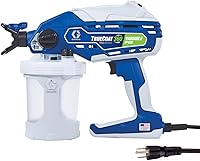
A handheld airless sprayer may fit a smaller household project if you want variable speed and no thinning for compatible paint. The Graco TrueCoat 360 Variable Speed is intended for projects up to 2 gallons and includes narrow and wide paint tips.
Check the instructions for the right tip and pressure setting for your coating. Learn more in our guide to airless sprayers.
How do you set up the sprayer and paint?
Set up the sprayer by reading its instructions, preparing the coating as directed, and testing the spray pattern on scrap. Don't thin paint unless the coating or sprayer directions call for it.
Strain paint if its instructions recommend it, and mix it thoroughly without whipping air into it. Pour only the amount needed into the sprayer's container or cup, and keep the rest covered.
Set the door upright or flat according to the sprayer's directions and the pattern you need. Make sure the support is stable before spraying.
Start with a test board made from a similar material or a spare door. Adjust flow and pattern until the fan looks even, without heavy runs at the edges or dry gaps in the center.
How do you spray cabinet doors without runs?
Spray cabinet doors with steady, overlapping passes, keeping the gun moving before you pull the trigger and after you release it. Hold the sprayer at a consistent distance and keep it square to the surface.
Start with the edges, using a light pass rather than loading them with paint. Then coat the face in parallel passes, overlapping each pass by about half the fan width.
Move at a steady pace across the whole door. Slowing down at the end of a pass or holding the sprayer too close can leave a wet stripe or run.
For raised-panel doors, spray the inside corners and panel details first with short, controlled passes. Follow with longer passes across the rails and stiles, keeping the gun perpendicular as you move.
Watch the wet edge under good light. If a run starts, don't keep spraying over it; follow the coating's directions for fixing defects after the coat dries.
How do you coat both sides of a cabinet door?
Coat one side and its edges, then wait until the finish is ready to handle before turning the door over. Follow the coating directions, since touch-dry time and safe handling time can differ.
Spray the back first if you want the most visible front face to be your final pass. Let the back dry on supports, then flip the door carefully and coat the front.
Use clean gloves when handling a partly finished door. Avoid touching painted edges, and don't set a wet face against a flat surface.
How many coats should you apply?
Apply thin coats until the surface has even coverage, using the recoat timing on the paint instructions. A heavy coat can sag, pool in corners, or take longer to dry.
Let each coat dry for the full time stated for the temperature and conditions in your work area. Lightly sand between coats only if the coating directions recommend it or the finish has rough dust nibs.
Keep the work area clean between coats. Dust settling on a wet surface can leave bumps that show under the next layer.
When can you reinstall cabinet doors?
Reinstall cabinet doors only after the coating has reached the handling or cure stage specified by its manufacturer. A surface can feel dry before it is hard enough to resist sticking or dents.
Remove masking and supports carefully. Reattach the hinges and hardware to the labeled doors, and adjust the doors only after the finish can handle normal contact.
If doors stick to the cabinet frame, stop closing them and allow more cure time. For broader indoor projects, see indoor painting jobs and sprayer tips.
What should you do if the spray finish looks uneven?
If the finish looks uneven, let it dry before sanding or adding another coat. Trying to fix a wet run or rough patch immediately can make the defect larger.
A stripy pattern can come from an inconsistent distance, speed, or overlap. Practice again on scrap and adjust one setting at a time.
Spitting or sputtering can signal a clog, a loose connection, or paint that needs attention under the sprayer's instructions. Stop, relieve pressure as directed, and clean or check the parts described in the manual.
For help diagnosing that issue, read why a paint sprayer spits. Clean the sprayer promptly after finishing, following its maker's steps for the coating you used.
What is the best order for spraying cabinet doors?
The best order is label, remove, clean, sand, mask, prime, spray, dry, flip, finish, and reinstall. Keep the same sequence for every door so you don't miss an edge or put hardware back on the wrong one.
Use an HVLP system if you want pattern adjustment for detailed door work, or consider a handheld airless sprayer for a small project where its controls and compatible paint suit your needs. Choose the sprayer that fits your coating and the number of doors, then practice before starting.
For the next step, compare paint sprayers for doors and trim and review the cabinet-focused picks in best paint sprayers for kitchen cabinets.
Frequently asked questions
Should I remove cabinet doors before spraying?
Yes, removing cabinet doors lets you coat the edges and both faces while keeping spray off the cabinet frames. Label each door and its hardware location before removal, then support the doors on a stable surface or rack that lets air reach the edges.
Do cabinet doors need primer before spraying?
Use a primer suited to your cabinet material and chosen topcoat, especially on bare wood, repaired areas, or surfaces where the old finish has been sanded through. Follow the paint and primer directions for compatibility, surface prep, and drying time.
How many coats should I spray on cabinet doors?
Apply the number of thin coats needed for even coverage, following the coating directions for recoat time and coverage. Two light coats often give more control than one heavy pass, but color, primer, surface, and paint instructions affect the result.
How long should cabinet doors dry before reinstalling?
Wait for the coating's stated cure time before reinstalling or closing doors against their frames. Dry to the touch can come before full cure, so follow the can directions and handle fresh finishes gently to avoid sticking, dents, or fingerprints.