Paint Sprayers Explained: Types, Jobs and How to Pick
Paint sprayers fall into airless, HVLP and handheld types. Airless models suit broad surfaces and larger projects, HVLP sprayers give you more control for smaller finish work, and handheld models trade capacity for easy setup and movement.
On this page (6 sections)
Paint sprayers use airless, HVLP or handheld designs for different jobs. Airless sprayers suit broad surfaces and larger projects, HVLP models offer adjustable control for smaller finish work, and handheld sprayers trade capacity for compact setup.
The best fit depends on what you plan to coat, how much area you have, and how you want to manage paint and cleanup. A fence, a bedroom wall and a cabinet door each make different demands.
This guide explains how the main types work, where each one fits, and what to check before you buy. For a shortlist aimed at common household projects, see our best paint sprayers for home use.
What are the main types of paint sprayers?
Airless, HVLP and handheld sprayers cover most home painting needs. They differ in how they move paint, how much work they suit and how much control they offer over the spray pattern.
| Type | How it works | Good fit | Consider |
|---|---|---|---|
| Airless | A pump pushes paint through a small tip at high pressure | Walls, fences, decks and other broad surfaces | Masking, pressure adjustment and cleanup |
| HVLP | A turbine moves a high volume of air at lower pressure | Furniture, cabinets, trim and detail work | Paint capacity and nozzle choice |
| Handheld | A compact unit combines the spray system and hand-held body | Small projects and short sessions | Refill frequency and hand comfort |
These labels describe broad design groups, not a guarantee of finish or speed. The tip, nozzle, paint, surface preparation and technique all affect the result.
What is an airless paint sprayer?
An airless sprayer uses a pump to push paint through a spray tip. It can suit larger surfaces because some models draw directly from a one- or five-gallon bucket instead of a small cup.
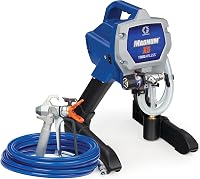
The Graco Magnum X5 and Graco Magnum Project Painter Plus are airless examples with adjustable pressure and flexible suction tubes. Graco describes the X5 for projects up to 10 gallons, and the Project Painter Plus for projects up to 5 gallons.
Airless spraying can cover broad surfaces, but it calls for careful masking because paint can travel beyond the target area. For model comparisons, start with our airless paint sprayer picks.
What is an HVLP paint sprayer?
HVLP stands for high volume, low pressure. These sprayers use a turbine to move air and paint through a nozzle, and many let you adjust paint flow, spray width or pattern.
The Wagner FLEXiO 595 includes an iSpray nozzle for broad jobs and a Detail Finish nozzle for smaller finish work. Its nine power settings and adjustable flow, width and pattern let you change the setup for different tasks.
HVLP units can suit furniture, cabinets and trim, where a smaller work area and adjustable pattern may be helpful. See our fine-finish sprayer guide for more on choosing a sprayer for those jobs.
Are handheld paint sprayers a separate type?
Handheld describes the form of the sprayer, and some handheld models are airless. Their compact size can make them easier to move around a smaller job, while the paint supply and project capacity may be more limited than a stand unit.
The Graco TrueCoat 360 Variable Speed is a handheld airless sprayer designed for projects up to 2 gallons. It has variable speed control and can spray paint or stain unthinned.
Think about how often you want to stop and refill, along with the size and position of the surface. For one or two doors, portability may matter more than bucket-fed capacity.
Which paint sprayer type fits your project?
Match the sprayer to the surface area and finish you need. Large, open surfaces favor an airless setup; smaller parts with edges or detail may favor an HVLP sprayer or a compact handheld model.
| Project | Type to consider | Why |
|---|---|---|
| Interior walls in several rooms | Airless | Broad surfaces and larger paint needs can favor bucket-fed capacity |
| Cabinets and furniture | HVLP | Detail nozzles and pattern controls can help with smaller work |
| Fence or shed | Airless or HVLP | Choose by area, paint supply and the sprayer's material guidance |
| A few doors or small repairs | Handheld | Compact setup can suit a short, contained job |
| Trim and narrow surfaces | HVLP | Pattern width and direction controls can help target the work |
Treat the table as a starting point, not a promise that every model can spray every coating. Check whether the sprayer supports your paint or stain and whether the nozzle suits the surface.
Is airless or HVLP better for cabinets?
For cabinet doors and smaller pieces, an HVLP sprayer is often a sensible starting point because detail nozzles and adjustable patterns can suit fine work. Airless models can also spray cabinets, but you'll need to manage pressure, masking and overspray carefully.
The right choice depends on how many doors you have and where you can spray them. Compare the trade-offs in our HVLP vs airless cabinet guide.
Which sprayer works for interior walls?
An airless sprayer often fits a multi-room wall project because it can handle larger areas and some models draw paint from a bucket. An HVLP sprayer may work for a smaller wall job if its nozzle and paint capacity match the work.
Protect floors, trim, windows and furniture before spraying indoors. Our interior wall paint sprayer guide can help you compare options for rooms.
What should you use on fences and siding?
For a long fence or broad siding, consider an airless sprayer with a paint supply that can keep up with the job. For a smaller fence or shed, an HVLP unit may offer enough capacity and more flexible pattern adjustments.
Use the sprayer's instructions to confirm it supports the material you plan to apply. See our paint sprayer guide for fences and sheds for project-specific options.
What should you check before choosing a paint sprayer?
Check project size, paint compatibility, control and cleanup before you choose. These practical details often matter more than a broad label such as airless or HVLP.
How much area will you spray?
Estimate the surface area and count the number of separate pieces. A whole room or a long fence creates a different workload from a chair, door or a set of cabinet fronts.
A larger job may make bucket-fed capacity useful. On a small project, a handheld sprayer can be easier to move and store, even if you refill it more often.
What paint or stain will you use?
Check the sprayer's instructions for the coating you plan to use. Some models can spray many paints and stains unthinned, but that does not mean every coating will work with every tip or nozzle.
Follow the paint label and the sprayer maker's instructions if thinning is required. Do not add water or another thinner based on a general rule alone.
How much control does the job need?
Look for controls that match the surface: adjustable pressure for airless spraying, or changes to flow, width and pattern on an HVLP sprayer. Narrow surfaces and corners can call for a different pattern from a broad wall or fence panel.
Practice on scrap material when you can. Keep the sprayer moving at an even pace and follow the model's recommended distance and overlap.
How much setup and cleanup can you manage?
Spraying needs preparation around the work area. Cover nearby surfaces, use suitable protective gear, and follow the paint and sprayer instructions for ventilation and cleanup.
Cleanup differs by model and paint type. Check how the parts come apart and what the maker requires after using your chosen coating.
How far must the sprayer reach?
A stand sprayer can keep the paint source near the bucket while the hose reaches the work. The Graco Magnum X5 supports up to 75 ft of hose, while the Project Painter Plus supports up to 50 ft.
That reach can help when painting a second story or working around a large area. Confirm what hose is included and what the model supports before planning a job around it.
What mistakes should you avoid with a paint sprayer?
Most preventable problems start with poor preparation or an unsuitable setup. Read the instructions, protect nearby surfaces and practice before applying paint to the finished work.
- Skipping masking: Paint droplets can reach surfaces beyond your target. Cover floors, windows, furniture and nearby fixtures before spraying.
- Using the wrong tip or nozzle: Match the sprayer setup to the coating and surface, following the model's instructions.
- Moving too slowly or stopping mid-pass: Keep a steady motion to reduce heavy spots, and avoid pausing while pointed at the surface.
- Starting at full pressure: On an adjustable airless unit, begin with the maker's recommended setup and adjust carefully.
- Ignoring cleanup: Follow the sprayer and paint instructions after each session so paint does not dry in the parts.
- Assuming spraying is faster overall: Spraying can cover a surface quickly, but masking and cleanup take time too.
Test your setup on cardboard or scrap material before starting the visible surface. Adjust only one setting at a time so you can see what changes.
How do you choose between the four example sprayers?
Choose by job size first, then by how you want to handle the paint supply. The two Magnum units suit larger airless work, while the FLEXiO 595 and TrueCoat 360 offer different approaches for smaller or more varied projects.
| Sprayer | Type | Project guidance | Useful feature |
|---|---|---|---|
| Graco Magnum X5 | Stand airless | Projects up to 10 gallons | Supports up to 75 ft of hose |
| Graco Magnum Project Painter Plus | Stand airless | Projects up to 5 gallons | Supports up to 50 ft of hose |
| Wagner FLEXiO 595 | HVLP | Walls, ceilings, siding, furniture and cabinets | Two nozzles and nine power settings |
| Graco TrueCoat 360 Variable Speed | Handheld airless | Projects up to 2 gallons | Variable speed control |
The X5 and Project Painter Plus both offer adjustable pressure and a flexible suction tube for drawing from a one- or five-gallon bucket. The X5 is described for a larger project size, while the Project Painter Plus may suit a smaller annual workload.
The FLEXiO 595 includes nozzles for broad surfaces and detail finish work. The TrueCoat 360 is a compact handheld airless option for smaller projects.
How do you choose the right paint sprayer?
Choose an airless sprayer if you're covering a large area and want bucket-fed capacity. Choose HVLP for smaller finish work where nozzle and pattern adjustments matter, or consider a handheld model for compact jobs.
Before buying, match the project's surface area, coating and reach to the sprayer instructions. If you're weighing a sprayer against a roller for a room, our spraying vs rolling interior walls guide explains the extra setup each method needs.
Frequently asked questions
What are the main types of paint sprayers?
The main types are airless, HVLP and handheld sprayers. Airless units suit larger areas and can draw from a paint bucket, while HVLP models use a turbine and are often suited to furniture, cabinets and detail work.
Handheld units are compact choices for smaller jobs.
Is an airless or HVLP sprayer better for home use?
Choose an airless sprayer for larger projects such as rooms, fences or siding, especially when drawing paint from a bucket is useful. An HVLP sprayer can suit furniture, cabinets and trim where adjustable patterns and a detail nozzle help you control a smaller work area.
Can a paint sprayer handle interior walls?
Yes, many sprayers can handle interior walls, but the right type depends on the room size and setup you can manage. Airless models suit broad wall areas, while an HVLP sprayer can work for walls if its nozzle and paint capacity fit the project.
Do you need to thin paint for a sprayer?
It depends on the sprayer, material and setup. Some models are designed to spray many paints unthinned, but always follow the specific sprayer and paint instructions.
Check the paint label and model guidance before adding water or another thinner.
What should I consider before spraying indoors?
Plan masking and ventilation before spraying indoors because fine paint droplets can travel beyond the surface you intend to coat. Cover floors, furniture, outlets and nearby openings, and follow the paint and sprayer safety instructions for protective gear and room ventilation.