Are Airless Paint Sprayers Any Good?
Yes, airless paint sprayers are good for large, flat painting jobs. They push paint straight from a bucket onto walls, siding, decks and fences fast, without thinning. For a single small room or a lot of detail work, a brush and roller still make more sense.
On this page (8 sections)
- Are airless paint sprayers any good compared with rollers?
- What kinds of projects suit an airless paint sprayer?
- When is an airless sprayer not worth it?
- How much prep does an airless sprayer need?
- What should you know before you start spraying?
- How hard is it to clean an airless sprayer?
- Which airless sprayer fits your job?
- So, are airless paint sprayers any good for most homeowners?
Yes, airless paint sprayers are good for the right job. They shine on large, flat surfaces, where pushing paint straight from a bucket onto walls, siding or a fence saves hours and leaves an even coat.
For one small room or a lot of cutting in around trim, a brush and roller are still the smarter buy.
The honest catch is that an airless sprayer is a system, not a gadget. You need to mask properly, learn a pressure setting, and clean the pump when you finish.
When those steps fit your project, an airless sprayer earns its place. When they don't, the setup can eat the time you saved.
Are airless paint sprayers any good compared with rollers?
Yes, for speed and finish on broad flat areas, an airless sprayer beats a roller. A roller is slower but needs almost no prep and cleans up in minutes.
The difference comes down to how paint leaves the tool. An airless pump forces paint through a small tip at high pressure, so it lands as a fine, even fan.
A roller lays paint down in passes that you then work out. On a long wall or a fence line, the sprayer covers ground quickly and leaves fewer lap marks.
Where the roller wins is small or fussy work. Cutting in around windows, painting a closet, or touching up a scuff takes a roller and a few minutes.
An airless sprayer would need masking and a full cleanup for the same result. Match the tool to the size of the surface and the job goes smoothly.
What kinds of projects suit an airless paint sprayer?
Large, flat, low-detail surfaces suit an airless sprayer best. That means house exteriors, big interior walls, ceilings, decks, fences and siding.
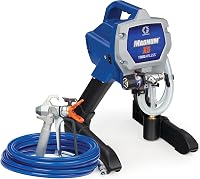
The Graco Magnum X5 is built for this kind of work. Graco says it handles projects up to 10 gallons in size, which covers multiple jobs a year for a DIY homeowner.
Its adjustable pressure control lets you spray paint or stain unthinned, and the flexible suction tube draws straight from a 1 or 5 gallon bucket. It also supports up to 75 ft of hose, so you can reach peaks or a second story without moving the pump.
That reach matters on siding and two-story walls. You set the bucket down, run the hose, and work the gun across the surface instead of climbing a ladder with a roller.
For a homeowner planning to repaint a house or a long fence, the time saved is real.
When is an airless sprayer not worth it?
An airless sprayer isn't worth it for a single small room, a few pieces of furniture, or heavy detail work. The masking and cleanup can take longer than rolling the same space.
Think about the ratio of flat surface to edges. A bedroom with four walls, a ceiling and a door frame has a lot of cutting in and not much open wall.
A roller handles that quickly. A sprayer needs you to mask the floor, windows and trim first, then clean the pump and gun afterward.
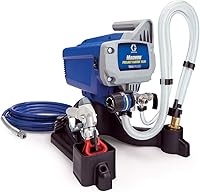
Small handheld airless units sit in the middle. The Graco TrueCoat 360 Variable Speed fits projects up to 2 gallons and needs no thinning.
Its variable speed control lets you set the pace for the surface in front of you. That suits a door, a cabinet or a couple of walls, where a full cart pump would be more machine than the job needs.
If your list is one room or a handful of trim pieces, put the money into good brushes and a roller cover instead. Come back to an airless sprayer when the job gets big enough to justify it.
Our guide to the best paint sprayer for beginners covers the smaller options in more detail.
How much prep does an airless sprayer need?
More than a roller, mostly because of overspray. Airless sprayers throw a fine mist beyond the gun, so masking is the step that decides whether the job goes well.
Cover floors with drop cloths and tape the edges down. Mask windows, door hardware, outlets and any trim you don't want painted.
Shut off adjoining rooms and move furniture out or cover it fully. Outside, cover plants, walkways and anything parked nearby.
Then set the pressure. Start low and raise it until the paint lays down in an even fan without running.
Too much pressure sends paint into the air and wastes it; too little leaves a rough, spattery coat. A scrap board or a hidden patch of wall is the place to dial it in.
Take your time on this stage. A tidy masking job and a tested pressure setting do more for the final finish than any feature on the pump.
The spraying itself is the quick part.
What should you know before you start spraying?
Prime the pump, keep the gun moving and overlap each pass. Those three habits cover most of the mistakes first-time users make.
Priming fills the pump and hose with paint and pushes out air. Without it, the gun spits and the first stretch of wall looks patchy.
Our walkthrough of how to prime an airless paint sprayer takes you through it step by step.
Once paint flows, hold the gun a steady distance from the surface and move at an even speed. Overlap each pass by about a third so the coats blend.
Trigger the gun before you reach the wall and release after you pass the edge, so you never build a heavy blob at the start or end of a stroke.
Keep the tip clean as you go. A partial clog throws the fan off and leaves streaks.
Most guns have a reversible tip you can turn to clear it, or you can stop and wipe it.
How hard is it to clean an airless sprayer?
Cleaning takes about as long as masking did, and skipping it ruins the pump. Paint left in the line hardens and clogs the tip, valve and hose.
Flush the system with water for latex paint or the right solvent for oil-based finishes. Run the flush through the gun until it comes out clear, then store the pump with protective fluid so seals don't dry out.
Our full process for how to clean an airless sprayer after latex paint walks through each part.
Owners of specific models can follow the steps for their machine. If you run an Avanti unit, this guide to how to clean avanti airless paint sprayer covers the pump and gun in order.
Do the cleaning the same day you finish. Fresh paint rinses out in minutes; dried paint can mean a rebuild.
That single habit is the main thing that separates a sprayer that lasts years from one that quits after a season.
Which airless sprayer fits your job?
Pick the size to the surface area and your budget, not to the biggest number on the box. A pump with more pressure than your jobs need just costs more and takes longer to clean.
For a whole exterior, a long fence or several rooms in one go, choose a cart model. The VEVOR 950W Cart Airless reaches 3000 psi with a 950W motor and rolls on a wheeled frame.
Its pump body comes off for cleaning with the included brush, and VEVOR says the fan-shaped spray pattern gives an even coat with less waste. It also includes an extension pole for high or low work.
For a smaller list of surfaces, a handheld unit like the Graco TrueCoat 360 Variable Speed is easier to set up and clean. For house-sized work, the Graco Magnum X5 offers the reach and bucket draw that exterior jobs need.
One practical note: check the tip size and hose length on the model you pick against the paint you plan to use. A tip that's too small for thick paint slows the job and stresses the pump.
So, are airless paint sprayers any good for most homeowners?
Yes, they're good when the job is big and flat, and less useful for small or detailed work. A whole exterior, a deck, a fence or several rooms at once rewards the setup.
A single room or a few pieces of furniture doesn't.
If your project is large, choose a cart pump and learn the priming and cleaning routine before you start. Pick the Graco Magnum X5 for house exteriors and multi-room jobs, the Graco TrueCoat 360 Variable Speed for doors and smaller surfaces, or the VEVOR 950W Cart Airless for medium to large work on a tighter budget.
If your list is short and full of edges, keep the roller and spend the money on a good brush set instead.
Frequently asked questions
Do you have to thin paint for an airless sprayer?
No, most modern airless sprayers are built to spray paint and stain unthinned. Some models have adjustable pressure so you can match the flow to thick paint.
A quick test spray on scrap is the best way to set it.
How much paint does an airless sprayer use?
More than a roller on a small job, because some paint goes into the air as overspray. On large flat surfaces the speed makes up for it.
Mask well and keep a steady pass so paint lands on the wall, not on the floor.
Can you use an airless sprayer indoors?
Yes, airless sprayers work indoors, but overspray makes masking the priority. Cover floors and furniture and shut off nearby rooms.
Thin finishes like some lacquers and stains suit a smaller handheld unit better than a big cart pump.