HVLP vs Airless for Cabinets: Which Sprayer Fits? (November 2026)
Choose HVLP for more control on cabinet doors and detail work; choose airless for faster coverage across a larger project. Your cabinet finish also depends on prep, paint choice and steady spray technique.
On this page (8 sections)
- HVLP vs airless for cabinets: which gives you more control?
- Which sprayer handles a full set of cabinets faster?
- How do overspray and masking compare?
- What matters more: the sprayer or the paint?
- Which setup fits your cabinet project?
- What should you check before spraying cabinet doors?
- Which should you choose for cabinets?
- Sources
Choose HVLP for more control on cabinet doors and detail work; choose airless for faster coverage across a larger project. The right choice for hvlp vs airless for cabinets depends on how many parts you need to coat and how much control you want around edges and profiles.
HVLP systems use a high volume of air at low pressure to atomize paint. Airless sprayers use pump pressure to push paint through a tip, which can cover surfaces quickly but may call for more masking and practice.
For one kitchen, either type can work. Prep, the coating's instructions and your spray technique affect the finish as much as the sprayer category.


HVLP vs airless for cabinets: which gives you more control?
HVLP is usually the easier fit when control on doors, frames and smaller details is your priority. Airless can handle cabinet surfaces too, but its fast delivery makes good distance, movement and masking important.
Cabinet doors have edges, routed profiles and corners where paint can collect. Practice on scrap with the same paint, nozzle or tip, and settings before you spray the finished doors.
An HVLP system can give you fine control over the spray pattern. The Wagner FLEXiO 595 includes a Detail Finish nozzle for cabinets and furniture, plus adjustable flow, spray width and pattern.
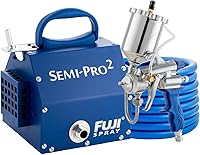
The Fuji Spray Semi-PRO 2 has a spray gun with adjustable fan control. Its 25 ft hose lets you move around a work area while keeping the turbine separate from the gun.
An airless handheld like the Graco TrueCoat 360 Variable Speed uses variable speed control and sprays paint or stain unthinned. Start with a test pass and make adjustments gradually to avoid laying down too much paint at once.
For a broader look at equipment types, see paint sprayers explained. If cabinet selection is your next step, our guide to paint sprayers for kitchen cabinets covers other features to compare.
Which sprayer handles a full set of cabinets faster?
Airless is a strong option when you have many surfaces to cover and want to work quickly. Total time still depends on masking, setup, drying and cleanup, so a faster pass doesn't guarantee a faster finished kitchen.
Airless sprayers deliver paint quickly. That can help with a large run of cabinet boxes and doors, but the speed also makes it easier to apply too much paint if you pause or move too slowly.
HVLP can make a smaller work area feel more manageable. The FLEXiO 595 has an iSpray nozzle for broader surfaces and a Detail Finish nozzle for smaller pieces, so one tool can move between different tasks.
The Fuji Semi-PRO 2 is a dedicated turbine and gun arrangement. Its 1 qt bottom-feed cup may need refilling during a larger job, while a handheld can be easier to carry between a workbench and the cabinets.
Plan for the whole process, not just the time the trigger is pressed. Our step-by-step guide to spraying cabinet doors explains how to organize the doors, test your spray and apply coats evenly.
How do overspray and masking compare?
HVLP can be easier to manage around detail work, while airless requires careful masking because it lays down paint quickly. Neither method eliminates overspray, so protect nearby surfaces and allow room for airflow.
Remove cabinet doors, drawers and hardware where practical. Cover counters, floors, appliances, walls and cabinet interiors that won't be painted.
HVLP's lower-pressure approach can help limit bounce back compared with some airless setups, but the amount of overspray varies with the coating, settings and technique. Don't spray in a finished kitchen without protecting it.
Airless paint can travel beyond the immediate target, especially if you use the wrong tip, hold the gun too far away or turn the spray toward an exposed surface. Check your manual for tip choice, pressure settings and safe operating steps.
Wear the protective gear recommended by the coating and sprayer makers. Keep people and pets out of the work area until the paint is dry and the space is safe to use.
What matters more: the sprayer or the paint?
Use paint made for cabinets and follow its label, because the coating and surface preparation shape the result. A sprayer can't make a coating suitable for cabinetry or fix a poorly prepared surface.
Cabinet finishes need to adhere to a surface that may be glossy, greasy or worn. Clean thoroughly, sand as directed and use a compatible primer when the paint system calls for one.
Check whether your paint needs thinning before spraying. The FLEXiO 595 is described as able to spray unthinned interior and exterior paints with its iSpray nozzle, and the Graco TrueCoat 360 is designed to spray paint or stain unthinned.
Those product details don't tell you that every cabinet coating will spray perfectly as-is. Follow the paint label and sprayer manual, then test the exact combination on scrap.
The Fuji Semi-PRO 2 includes a 1.3 mm air cap set installed, but that alone doesn't determine the right setting for your paint. Check the coating maker's instructions and adjust only through the method the sprayer supports.
Our guide to the best paint for a sprayer explains what to check on the can before filling a sprayer.
Which setup fits your cabinet project?
Choose a handheld HVLP for a smaller cabinet job with detail work, a handheld airless for a compact setup with fast delivery, or a turbine HVLP system for a dedicated spray station. Match the setup to the workspace as well as the cabinet count.
The Wagner FLEXiO 595 gives you two nozzles and 9 speed settings. Its adjustable flow, width and spray pattern let you tailor the setup to a door, frame or other piece.
This Graco sprayer suits a small cabinet project when you want airless delivery in a handheld format. Its variable speed helps you control the pace, while careful masking protects the surrounding room.
Choose this setup if you want the turbine set away from the spray gun and enough hose to move around a workbench. Its 1 qt cup is something to consider if you have many doors to coat.
For a comparison focused on furniture, see HVLP sprayers for furniture. Furniture and cabinets share detailed surfaces, though the project size and coating can differ.
What should you check before spraying cabinet doors?
Practice on scrap and confirm the coating, settings and spray pattern before coating the actual doors. This helps you spot runs, dry spray or uneven coverage while adjustments are still easy.
Use a piece of cardboard or scrap with a similar shape and surface. Hold the gun at the distance recommended in the manual, keep your arm moving and overlap passes consistently.
Check the finish under good light after it dries. If it looks rough or uneven, revisit surface prep and coating instructions before changing several sprayer settings at once.
Arrange the doors so each can dry without touching another surface. Keep track of hinges, screws and door locations so reassembly is straightforward.
Which should you choose for cabinets?
Choose HVLP when detail control and a small, tidy spray area matter most; choose airless when faster coverage across a larger cabinet job is the priority. If you want to compare more models before deciding, start with our cabinet sprayer guide.
The FLEXiO 595 is a flexible handheld option with a dedicated Detail Finish nozzle. The Fuji Semi-PRO 2 offers a separate turbine system and adjustable fan control, while the TrueCoat 360 brings variable speed to a handheld airless setup.
For hvlp vs airless for cabinets, base your choice on the amount of work, the coating instructions and the control you can maintain. Set up a scrap test before committing to the cabinet doors.
Sources
- Wagner FLEXiO 595 product information
- Graco TrueCoat 360 product information
- Fuji Spray Semi-PRO 2 product information
Frequently asked questions
Is HVLP or airless better for painting cabinets?
HVLP often fits cabinet work better when you value control on doors, frames and smaller parts. Airless can be a practical choice for faster coverage across many cabinet surfaces, but it calls for careful masking and a consistent technique to avoid excess paint.
Can you use an airless sprayer on cabinet doors?
Yes, an airless sprayer can apply paint to cabinet doors, provided the paint and tip suit the job and you follow the sprayer's instructions. Practice on scrap first, keep the gun moving, and mask nearby surfaces because overspray can travel beyond the door.
Do HVLP sprayers need thinned paint for cabinets?
It depends on the sprayer and paint. The FLEXiO 595 can spray unthinned interior and exterior paints with its iSpray nozzle, while the Fuji Semi-PRO 2 product details here don't specify a thinning rule.
Check the paint label and the sprayer manual before preparing the finish.
How do you get a smooth finish on cabinet doors?
Clean, sand and prime the doors as the coating requires, then apply thin, even passes and let each coat dry as directed. Test the setup on scrap with the same paint and settings, and avoid stopping the spray over an edge or holding the gun too close.
Should cabinet doors be sprayed flat?
Spraying doors flat can help reduce runs because the wet coating isn't flowing down a vertical face, but it takes a clean, level work area and enough room for drying. Follow the coating instructions, and support the doors so freshly painted faces don't touch other surfaces.