Can I Use a Paint Sprayer Indoors?
Yes, you can use a paint sprayer indoors, as long as you mask the room, ventilate it and pick a sprayer with low overspray. The paint goes on faster than with a roller, but the prep is what keeps the job clean and safe.
On this page (9 sections)
- Can you use a paint sprayer inside a house?
- Which sprayer types suit indoor painting?
- How do you prepare a room for indoor spraying?
- How do you ventilate and stay safe while spraying?
- Which sprayer fits your indoor job?
- Can you spray cabinets and trim indoors?
- How do you keep overspray and cleanup under control?
- Do you need to thin paint for an indoor sprayer?
- Which sprayer should you buy for indoor work?
Yes, you can use a paint sprayer indoors, as long as you mask the room, ventilate it and pick a sprayer with low overspray. The paint goes on faster than with a roller, but the prep is what keeps the job clean and safe.
A sprayer turns a slow roller job into a quick pass across the wall. The catch is fine mist that lands on everything you didn't cover.
This guide shows how to set up a room so an indoor paint sprayer helps instead of making a mess.
Can you use a paint sprayer inside a house?
Yes, indoors is a normal place to use a paint sprayer. Makers build handheld and airless models for interior walls, ceilings, trim and cabinets.
Wagner says its FLEXiO 595 covers an 8 x 10 wall in about 5 minutes, which is why sprayers show up in whole-room makeovers. A roller needs several passes to reach the same coat.
The real question isn't whether a sprayer belongs indoors. It's whether you've prepared the room and the paint for it.
A sprayer pushed into an unmasked bedroom coats the furniture and floor in a fine film.
Which sprayer types suit indoor painting?
Handheld HVLP sprayers are the easiest fit for most interior rooms. They throw less mist, run from a normal outlet and handle small to medium jobs without a long hose run.
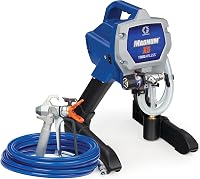
Airless sprayers move paint at high pressure and cover big surfaces fast. High-efficiency models like the Wagner Control Pro 130 Power Tank cut overspray by up to 55% compared with traditional airless designs, which matters inside a closed room.
Corded HVLP units sit in the middle. The Wagner Control Spray Max uses a two-stage turbine to break paint into fine particles, so it lays down a smooth finish on trim and furniture with very little fog.
Pick by room size and finish. One bedroom or a set of cabinet doors calls for a handheld or HVLP unit.
A whole floor of walls makes an airless sprayer worth the extra setup.
How do you prepare a room for indoor spraying?
Clear the room, mask every surface you can't move and seal the doorway before the sprayer is switched on. Prep usually takes longer than the painting itself, and skipping it is the main cause of spray disasters indoors.
Remove furniture, rugs and wall decor. Anything too heavy to move gets a drop cloth and a plastic sheet over the top.
Tape off baseboards, door casings, window frames and outlets. Cover floors with canvas drop cloths, then add a thin plastic layer so drips don't soak through.
Seal the room from the rest of the house with plastic over the doorway. Leave a flap you can open to step in and out.
Turn off the HVAC or block its vents so mist doesn't travel through the ducts. A box fan in a window pulling air out of the room helps keep the air moving.
Do you need to mask less with a low-overspray sprayer?
You need less masking than with a traditional airless unit, but not zero masking. Even low-overspray models send some mist past the spray pattern, and it settles on nearby surfaces.
Wagner's HEA technology reduces overspray and gives a softer spray with more control, which helps on walls and ceilings where the gun is close to the surface. It doesn't cover the gaps around trim or the floor under the wall.
How do you ventilate and stay safe while spraying?
Open windows and doors, run fans, and wear a respirator rated for paint mist. Spray paint is a fine aerosol, so ventilation and lung protection come before speed.
Cross-ventilation works best. Open a window on one side of the room and another on the opposite side, then put a fan at one window blowing outward.
The airflow carries mist and solvent vapor out of the house.
Wear a respirator with cartridges for organic vapor when you spray latex or oil paint. A dust mask doesn't filter paint particles or solvent vapor.
Keep children and pets out of the room and away from the exhaust window. Don't eat or drink in the spray area.
For solvent-based paints and stains, check the can for ventilation guidance. If the room has no window, stop and let the space air out.
Which sprayer fits your indoor job?
The right sprayer depends on how big the surface is and how fine the finish needs to be. These three models cover most indoor work, from a single wall to a set of cabinets.
Wagner FLEXiO 595: best for whole rooms and detail work
This handheld HVLP sprayer is the most flexible choice for indoor painting. It ships with two nozzles: the iSpray nozzle for walls and ceilings and the Detail Finish nozzle for cabinets and furniture.
Wagner says the X-Boost turbine sprays unthinned interior and exterior paints and stains. It has 9 speed settings, adjustable flow, and changeable spray width and pattern direction.
The unit weighs 10% less than earlier FLEXiO models and includes a cup liner for quick cleanup. For a bedroom, a hallway or cabinet fronts, it covers both broad walls and fine detail without buying two tools.
Wagner Control Pro 130 Power Tank: best for big wall runs
This is a stationary airless sprayer for readers painting several rooms or a whole house interior. Its 1.5 gallon hopper and 25 ft hose let you keep going without constant refills.
Wagner says HEA technology produces up to 55% less overspray than traditional airless sprayers. The softer spray and more consistent pattern give better control when the gun is close to a wall.
It's heavier and needs more masking than a handheld unit. If your indoor job is one room, this is more machine than you need.
Wagner Control Spray Max: best for trim and furniture
This corded HVLP sprayer is built for fine finish work. Its two-stage turbine handles thinned latex, stains and polyurethane, and its spray pattern runs from 1/2 inch to 12 inches wide.
The stationary base connects to the gun with a 20 ft hose, which cuts hand fatigue on long trim runs. It includes a 1 qt metal cup and a 1.5 qt plastic cup.
It's not the tool for a whole room of latex walls. For baseboards, doors and furniture, its low overspray and adjustable pattern make it a strong cabinet and trim sprayer.
Can you spray cabinets and trim indoors?
Yes, with a detail nozzle and a little extra care. Cabinets, doors and trim are the indoor jobs where a sprayer beats a brush by the widest margin, because sprayed paint lays flat without brush marks.
Remove doors and drawers and spray them in a garage or a masked, ventilated room. Stand them on edge or on sawhorses so you can reach every face.
Use the Detail Finish nozzle or a fine tip for cabinet work. Keep the gun moving at a steady distance and apply light coats rather than one heavy pass.
Our guide on how to spray cabinet doors walks through removal, spraying and rehanging step by step. For wall projects, compare models in our roundup of the best paint sprayers for interior walls.
For cabinet-heavy jobs, the best paint sprayers for cabinets covers finer tips and lower overspray options.
How do you keep overspray and cleanup under control?
Mask beyond the spray area, cover the floor twice and clean the gun before the paint sets. Overspray is the main indoor risk, and cleanup is where most sprayer frustration starts.
Plastic sheets taped to the walls around the work area catch mist that drifts past the edge. Add a second layer of drop cloth under the wall so drips don't reach the floor.
Keep a damp rag nearby for quick wipe-downs on taped edges.
Clean the sprayer as soon as you stop. Disconnect the cup or hopper, rinse the parts and run clean water or solvent through the gun until it sprays clear.
Wagner's Lock-N-Go design on the FLEXiO 595 lets you separate the sprayer from the turbine for a faster rinse.
Do you need to thin paint for an indoor sprayer?
Not always. Many handheld HVLP models spray unthinned interior latex, while some HVLP units need thinned paint.
The right answer comes from the sprayer's manual, not a general rule.
The FLEXiO 595's iSpray nozzle is built for unthinned paints and stains. The Control Spray Max's two-stage turbine handles thinned latex and thinner materials like stains and poly.
The Control Pro 130 Power Tank sprays a wide range of unthinned paints and stains.
Thinning changes the finish and the coverage. If the manual calls for thinned paint, use the amount it lists and stir well.
If the sprayer runs unthinned paint, skip the thinner and test the pattern on cardboard.
Which sprayer should you buy for indoor work?
For most homes, a handheld HVLP sprayer is the right indoor paint sprayer, and the Wagner FLEXiO 595 is the top pick. Its two nozzles handle walls and cabinets, and its low mist suits closed rooms.
Choose the Wagner Control Pro 130 Power Tank if you're spraying a whole floor of walls and want to cut overspray and refill time. Choose the Wagner Control Spray Max if your indoor jobs are trim, doors and furniture and you want the finest pattern control.
Whichever you buy, the safe indoor routine is the same: mask the room, ventilate it, wear a respirator and clean the sprayer the same day. That routine is what makes "can I use a paint sprayer indoors" a yes for almost any room in the house.
Frequently asked questions
Can you use a paint sprayer indoors without a mask?
No. Spray paint travels as a fine mist that can reach your lungs, so wear a respirator rated for paint vapors and keep the room ventilated.
A basic dust mask is not enough for solvent-based or latex paint mist.
Do you have to thin paint for indoor spraying?
Not with every sprayer. Some models spray unthinned interior latex, while HVLP models often need the paint thinned to a certain viscosity.
Check what your sprayer's manual asks for before you start a room.
How much overspray should you expect inside?
It depends on the sprayer type. High-efficiency airless models cut overspray by about half compared with older airless designs, while handheld HVLP units put out very little.
Masking still matters because some mist always drifts.
Is an airless sprayer too much for one bedroom?
Often, yes. An airless unit shines on whole-house jobs and large wall runs, while a handheld HVLP sprayer is easier to handle in one or two rooms.
Match the sprayer to the size of the job rather than buying for the biggest room.
Can you spray cabinets indoors with a paint sprayer?
Yes. Remove the doors and drawers, spray them in a ventilated garage or a masked room, and use a detail nozzle for a smooth cabinet finish.
Our guide on how to spray cabinet doors covers the steps in order.
How long does the room need to air out?
Plan on several hours with windows open and fans moving air, and longer for oil-based paints. Don't sleep in the room or bring children and pets back until the paint is dry and the smell has faded.