How Much Air Pressure for a Paint Sprayer?
HVLP sprayers run at about 2 to 5 psi at the air cap, while airless units push paint at 1,000 to 3,000 psi. Match the number to your sprayer type and coating, then fine-tune with a test spray on cardboard.
On this page (9 sections)
- What air pressure does an HVLP paint sprayer use?
- How much pressure does an airless paint sprayer need?
- Why do the two sprayer types use such different pressures?
- How do you set the pressure on an HVLP sprayer?
- What pressure setting works for different coatings?
- How do you know when the pressure is too high or too low?
- Where does the air pressure setting fit in the setup routine?
- Which sprayer makes pressure control easiest for a home job?
- What is the final answer on air pressure for a paint sprayer?
The short answer is that air pressure depends on the sprayer type. An HVLP rig runs at about 2 to 5 psi at the air cap and moves a large volume of air.
An airless sprayer pushes paint at 1,000 to 3,000 psi and needs a different setting for each coating. So when you ask how much air pressure for paint sprayer work, the first step is to name your machine.
The number only makes sense once you know whether you're working with low-pressure high-volume air or high-pressure fluid. Get that right and the rest is fine-tuning with a test pass.
What air pressure does an HVLP paint sprayer use?
An HVLP paint sprayer runs at about 2 to 5 psi at the air cap. HVLP stands for high volume, low pressure: the turbine moves a lot of air at a gentle pressure so the paint lands softly.
That low number is normal, not a sign of a weak machine. The Fuji Spray Semi-PRO 2 tops out at 5 psi at the cap, for example.
The Wagner Control Spray Max tops out at 2.63 psi. Both still atomize thinned latex, stains and poly because the volume of air does the work.
The key is to keep the pressure in that low window and thin the paint to the maker's guide. Pushing an HVLP rig past its design pressure does not make it spray better.
It just makes more overspray. A turbine's real job is to keep that gentle stream steady while the fluid flow stays matched to it.
The two-stage motor on the Fuji Spray Semi-PRO 2 supplies that steady air without the pulsing that small single-stage turbines can show.
How much pressure does an airless paint sprayer need?
An airless paint sprayer runs at 1,000 to 3,000 psi, far higher than any HVLP unit. The pump forces paint through a small tip at high pressure, and the tip does the atomizing.
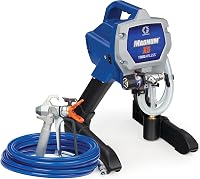
The Graco Magnum X5 tops out at 3,000 psi with a fully adjustable pressure dial. Start in the middle of the range and adjust from there.
Too little pressure leaves "tails," thin streaks at the edges of the fan. Too much pressure throws paint into the air as fog and lays it on too heavy.
The goal is the lowest pressure that still gives a full, even fan. That saves paint and gives a cleaner edge.
Airless rigs handle unthinned paint, so pressure and tip size matter more than thinning. The tip size and the pressure work as a pair: a worn tip sprays softer at the same dial setting, so check the tip before you crank the pressure up.
Why do the two sprayer types use such different pressures?
The two types use different pressures because they atomize paint in different ways. An HVLP turbine blasts a large volume of air past the fluid nozzle.
The air stream breaks the paint into fine drops and carries them to the surface at low speed. An airless pump has no air stream at all.
It squeezes paint through a tiny tip opening, and the sudden release into open air shatters the fluid into a spray. That is why HVLP reads in single-digit psi and airless reads in thousands.
Neither number is "better." Each one matches the way that machine moves paint.
The low HVLP pressure also explains the soft landing: the paint arrives at low speed, so less of it bounces off the surface as fog. The high airless pressure is what lets thick paint flow through a small opening without being thinned first.
If you're still choosing a rig, the paint sprayer for beginners guide covers which type suits small jobs and which suits whole rooms. Pick the type first, then set its pressure.
How do you set the pressure on an HVLP sprayer?
Set an HVLP sprayer by keeping the cap pressure in its low range and adjusting the material flow. Most turbines have a fixed output, so the control you change is the fluid flow at the gun.
Turn the flow knob in until the fan is even and the coat is wet, not runny. If the gun has an air control valve on the hose, use it to trim overspray and bounce-back.
The Fuji Spray Semi-PRO 2 includes an air control valve on its 25 ft hose for exactly this. The Wagner Control Spray Max adds a pressure dial and a material flow adjuster plus a round, horizontal or vertical air cap.
On both, the pattern shape and the fan width set the finish as much as the pressure does. A 25 ft hose on the Fuji and a 20 ft hose on the Wagner both keep the turbine base off your arm, so the gun stays light and the pressure at the cap stays even as you move across the work.
What pressure setting works for different coatings?
Match the pressure to the coating, then thin only as far as the maker allows. Thick latex needs the top of the HVLP range or an airless pump.
Stains and poly run thin and spray well at the low end. A test pass on cardboard tells you more than a number on a dial.
If the coat looks grainy or dry, the paint is too thick or the pressure is too low. If it looks wet and heavy with fog around it, ease off the pressure or the flow.
The kind of paint for sprayer guide covers which coatings atomize cleanly and which ones need extra thinning. Start with the coating's guide, then adjust by what you see on the test card.
Which sprayer cups suit thick versus thin coatings?
The cup you fill matters as much as the dial when you switch coatings. The Fuji Spray Semi-PRO 2 carries a 1 qt bottom feed cup, a size that holds enough for a door or a set of cabinet fronts without constant refills.
The Wagner Control Spray Max ships with two cups, a 1.5 qt plastic cup and a professional grade 1 qt metal cup, so you can keep one for thin stains and one for heavier material. The Graco Magnum X5 skips the cup entirely and sprays straight from a 1 or 5 gallon bucket through a flexible suction tube.
That last setup is the easiest for big wall jobs, since you never stop to pour paint into a small cup.
How do you know when the pressure is too high or too low?
Read the spray pattern to judge the pressure. A correct setting lays a wet, even band with soft edges.
Too low and you get thin tails, spitting or a fan that fades at the ends. Too high and you get heavy fog, a blotchy coat and paint drifting past the target.
A dry, sandy texture means the paint is arriving too dry, which points to too much air or too much distance. Adjust one thing at a time: pressure first, then flow, then distance.
Keep the gun moving at a steady speed and overlap each pass by about half the fan width. That rhythm matters as much as the gauge reading.
If the fan won't even out at any setting, check the tip and the thinning before blaming the pump. A fan that shifts from wide to narrow on its own points to a clogged tip or a loose air cap, not a pressure problem.
Where does the air pressure setting fit in the setup routine?
Pressure is one step in the setup, not the whole job. Prime the pump and flush the line first, then fill the cup and set the pressure.
Our guide to how to prime an airless paint sprayer walks through the flush and prime steps in order. Once the line is ready, run a test spray on scrap and dial in the fan.
For an HVLP rig, check the cup seal and the hose valve before you start. A loose cup or a kinked hose changes the pressure you feel at the gun.
Learn the basic how to use a air paint sprayer steps so the pressure setting sits in the right place. A clean tip and a tight setup give you a steady reading you can trust.
On an airless unit, the setup also includes checking the hose length, since the Graco Magnum X5 supports up to 75 ft of paint hose without diminishing performance.
Which sprayer makes pressure control easiest for a home job?
The easiest pressure control depends on the job size. For fine finish work on trim and furniture, an HVLP rig with a flow knob gives you fine control at low pressure.
The Wagner Control Spray Max pairs a pressure dial with a material flow adjuster and a 1.5 qt cup. For walls and larger projects, an airless pump with a pressure dial and a flexible suction tube is the better fit.
The Graco Magnum X5 sprays directly from a 1 or 5-gallon bucket and handles up to 10 gallons per project. For a serious user who wants a pro-style gun, the Fuji Spray Semi-PRO 2 offers a non-bleed gun with fan control and a two-stage turbine.
Pick by the surface, then set the pressure within that machine's range.
What is the final answer on air pressure for a paint sprayer?
Set 2 to 5 psi at the cap for HVLP and 1,000 to 3,000 psi for airless, then adjust to the coating. The type of sprayer decides the range, and the test pass decides the final number.
Keep the pressure as low as it goes while the fan stays full and even. That rule holds for thinned latex on a fence and for poly on a cabinet door.
When you're unsure, spray a test card before you touch the wall. A minute of testing saves a re-coat.
For anyone still shopping, match the machine to the job first, then treat how much air pressure for paint sprayer work as a setting you tune, not a number you guess. Start low, test, and raise only until the finish looks right.
Frequently asked questions
What pressure should I set on an airless paint sprayer?
Start around the middle of the unit's range and raise it until the fan is full and even. An airless sprayer like the Graco Magnum X5 tops out at 3,000 psi.
Too little pressure leaves tails and a blotchy coat, while too much causes heavy overspray.
Does more air pressure mean a better finish?
No. Extra pressure pushes more paint into the air as overspray and can leave a rough, dry texture.
Set the lowest pressure that still gives a full, even fan, then adjust the material flow to match.
That gives a smoother coat and less waste.
How do I know if the pressure is right?
Spray a test pass on scrap cardboard at the same distance you plan to use. A correct setting lays a wet, even band with soft edges.
Thin tails, spitting or a grainy texture mean the pressure or the thinning is off.
Can I spray thick paint at low pressure?
Thick paint needs more pressure or more thinning to atomize. For HVLP, thin the coating to the maker's viscosity guide and keep the cap pressure in its normal low range.
For airless, raise the pressure gradually until the fan evens out.
Do I need a pressure gauge?
A gauge helps you repeat a setting you liked and spot a drop as the tip wears. Many HVLP setups include an air control valve on the hose.
An airless unit's built-in dial is enough for most home jobs.