How to Use an Air Paint Sprayer
To use an air paint sprayer, load or thin the paint to the maker's spec, set the pattern and pressure, and spray in even overlapping passes with the gun about 10 to 12 inches from the surface. Keep the gun moving and clean it as soon as you stop.
On this page (10 sections)
- What should you prepare before spraying paint?
- How do you thin paint for a sprayer?
- How do you set the spray pattern and pressure?
- How do you spray paint evenly?
- How do you stop runs and streaks?
- How do you paint a fence or large outdoor surface with a sprayer?
- How do you clean an air paint sprayer?
- Which air paint sprayer suits which job?
- What mistakes should you avoid when using an air paint sprayer?
- How do you get a smooth finish with a paint sprayer?
To use an air paint sprayer, load or thin the paint to the maker's spec, set the pattern and pressure, and spray in even overlapping passes with the gun about 10 to 12 inches from the surface. Keep the gun moving and clean it as soon as you stop.
The first job is not the spraying. It's matching the paint to the sprayer and getting the fan pattern right before any paint hits the wall.
That part takes minutes and saves a lot of mess.
What should you prepare before spraying paint?
Set up the area and test the sprayer on scrap before you start. Move furniture, cover the floor, and mask trim, windows and outlets.
Tape drop cloths down so they don't flap into the wet paint. Tape off anything the fan can reach, because overspray drifts farther than you expect.
Pick a calm day for outdoor work. Wind carries overspray onto cars, windows and neighbors' property.
If you're working inside, see whether you can use a paint sprayer indoors safely.
Strain the paint through a mesh filter into a clean container. Lumps and skins clog nozzles and show up as spits in the finish.
Do a test pass on cardboard or scrap wood. You're checking three things: the fan shape, the paint flow and the speed you can move at comfortably.
How do you thin paint for a sprayer?
Thin only as much as the maker says your model needs. Many turbine HVLP sprayers handle unthinned latex, while some airless units want a little water added.
Check the paint can for the maker's sprayer guidance. Add water in small amounts and stir well; too much water weakens the film.
Use a simple flow test. Stir the paint, lift the stick, and watch the stream.
It should run off in a steady line, not plop in thick blobs.
Thin stains and sealers rarely need water. They're already thin enough for most sprayers.
Write down the ratio you used so a second can matches the first. A different mix can show as a shade or sheen change on the same wall.
How do you set the spray pattern and pressure?
Set the widest fan your work allows and tune the pressure until the edges of the pattern are crisp. A full, even fan gives the smoothest finish.
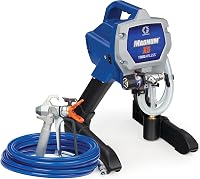
Start on the maker's recommended pressure. On an airless unit like the Graco Magnum X5, raise it until the fan forms fully, then lower it until the edges just start to close.
The Graco Magnum X5 has fully adjustable pressure control so you can spray paints or stains unthinned at any pressure.
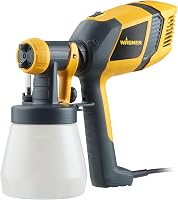
On a turbine sprayer, the power dial does the same job. The Wagner FLEXiO 595 has 9 speed settings, variable paint flow and adjustable spray width.
The maker says higher settings suit paints and lower ones suit stains.
Hold the gun so the fan stays vertical for side-to-side passes and horizontal for up-and-down passes. A twisted wrist produces an uneven coat.
How do you spray paint evenly?
Keep the gun parallel to the surface and overlap each pass by about half the fan width. Move your whole arm, not just your wrist.
Hold the gun 10 to 12 inches from the surface and keep that gap steady through the stroke. Arcing toward the wall in the middle of a pass puts more paint there and leaves a stripe.
Start each pass before the surface and stop after it. Triggering on and off the wall gives you full coats at the edges instead of thin ones.
Work in light coats and let each one flash off before the next. Two thin coats beat one heavy coat for both coverage and drying time.
Spray the ceiling or upper wall first, then work down. Gravity pulls wet paint downward, so starting at the top avoids dragging runs through fresh work.
How fast should you move the spray gun?
Move at a steady walking pace and keep it consistent from stroke to stroke. Too slow and the paint pools; too fast and the coat goes on dry and thin.
Watch the surface as you go. A wet edge that looks even and glossy is right.
A dull, dusty look means you're too far away or moving too fast.
Keep your wrist locked and pivot from the shoulder. Long, even strokes from the shoulder produce flatter coats than short flicks of the wrist.
How do you stop runs and streaks?
Runs come from too much paint in one spot, so thin the coat and keep moving. Streaks come from uneven overlap or a fan that isn't set right.
Check these four things first: the fan width, the gun distance, your speed and the overlap. Changing one at a time tells you which caused the problem.
Hold the gun closer than 10 inches and you'll flood the surface. Farther than 12 inches and the paint dries before it lands, leaving a gritty feel.
Clean the tip if the spray sputters or spits. A partly clogged tip narrows the fan and sends paint in a narrow stripe.
The Graco TrueCoat 360 Spray Tip Kit includes a wide and a narrow tip plus a color-matching inlet filter for TrueCoat 360 models 26D280, 26D281 and 26D283. The tips are reversible for clearing clogs and install without tools.
How do you paint a fence or large outdoor surface with a sprayer?
Spray fences and siding in horizontal passes, then back-brush to work the paint into the grain. Spray alone coats the surface but doesn't always reach the texture.
Start at one end and work in a straight line so you don't box yourself into a corner. Overlap each pass and keep the gun moving at the same distance.
Back-brush with a wide brush while the paint is still wet. That pushes paint into cracks and evens out the coat.
Spray both sides of a fence in one session when the weather allows. One coat on each side beats two coats on one side and none on the other.
Wind is the big variable outdoors. Spray with the wind at your back and mask anything downwind.
Our guide to how to paint a fence with a sprayer walks through the full process.
How do you clean an air paint sprayer?
Flush the gun and lines as soon as you stop spraying. Dried paint is the main reason sprayers fail or spray unevenly later.
Empty leftover paint back into its can. Wipe the cup and the outside of the gun while they're still wet.
Flush with the maker's cleaning fluid, then run clean water through until it comes out clear. On a turbine unit, disconnect the gun from the turbine first so water doesn't travel back into the motor.
Clean the nozzle and tip with a soft brush. Never poke a wire through a tip; it rounds the opening and ruins the pattern.
Let parts dry fully before reassembling. Store the sprayer with a little oil or pump protector where the maker asks for it.
Which air paint sprayer suits which job?
A handheld turbine sprayer suits fences, furniture and small walls; a wheeled airless unit suits whole rooms and exteriors. Match the tool to the size of the job.
The Wagner FLEXiO 595 is a handheld unit with an iSpray nozzle for broad surfaces and a Detail Finish nozzle for cabinets and furniture. Wagner says it sprays 10 times faster than a brush and covers an 8 x 10 wall in 5 minutes.
It weighs less than earlier FLEXiO models and packs into a storage case. Its small cup means more refills on long walls.
The Graco Magnum X5 is a wheeled airless sprayer for projects up to 10 gallons. It sprays straight from a 1 or 5 gallon bucket and supports up to 75 ft of hose.
Graco says it handles paints and stains unthinned at any pressure. That makes it the pick for a whole house exterior or a long fence line.
For the widest choice of home sprayers, compare our list of the best paint sprayers for home use. If fences are the main job, see the best paint sprayers for fences.
What mistakes should you avoid when using an air paint sprayer?
The most common mistakes are spraying too close, moving too fast and leaving paint in the gun. Each one shows up in the finish.
Spraying too close floods the surface and causes runs. Moving too fast leaves a thin, dry coat that needs extra passes.
Leaving paint in the gun clogs the tip and tip filter.
Skipping the test pass is another. A few strokes on scrap tell you more than any setting chart.
Don't spray in direct sun on a hot day. The paint skins over before it flows out and leaves a textured finish.
Don't top off a half-full cup with a different batch without stirring. The color can shift between cans.
How do you get a smooth finish with a paint sprayer?
Spray light coats, keep the gun moving and sand between coats when the maker allows it. Smoothness comes from even coverage, not from more paint.
Let each coat flash off according to the can. A tacky coat grabs dust and shows every speck.
Sand lightly with fine paper between coats on trim and furniture. Wipe the dust off before the next pass.
Check the finish in raking light, not straight on. Raking light shows orange peel and drips that a straight view hides.
Keep the nozzle clean throughout the job. A tip with dried paint sprays a narrow, spitting fan and leaves a rough surface.
That's how to use an air paint sprayer without fighting runs and clogs: set the pattern first, keep the gun parallel and moving, and flush it the moment you stop. Pick the Wagner FLEXiO 595 for fences and furniture or the Graco Magnum X5 for whole rooms and exteriors.
Then practice on scrap before the real wall, and the finish will come out even on the first coat.
Frequently asked questions
Do I need to thin paint for an air paint sprayer?
Follow the maker's guidance for your model. Many turbine HVLP sprayers handle unthinned latex with a wide nozzle, while some airless units want a small amount of water added.
Test a few strokes on scrap and add water only in small amounts if the paint won't flow.
How far should I hold the spray gun from the wall?
Hold it about 10 to 12 inches from the surface and keep that distance as you move. Closer gives a wet, heavy coat and more runs; farther away wastes paint and leaves a dry, gritty finish.
Let the first pass dry a little before judging the coverage.
What pressure should I set on an air paint sprayer?
Start at the maker's recommended setting and adjust from there. On an airless unit like the Graco Magnum X5, raise pressure until the fan is fully formed and lower it until the edges just start to close up.
On a turbine sprayer, use the power dial to match the material.
Can I stop halfway and leave paint in the sprayer?
No. Empty and flush the gun if you'll be away for more than a few minutes, or the paint will dry inside the nozzle and tip.
Flush with the maker's cleaning fluid, then run clean water through until it comes out clear before you put the sprayer away.