How to Use an Avanti Handheld HVLP Paint Sprayer
To use an Avanti handheld HVLP paint sprayer, fill the cup, thin the paint to the manual's ratio, set the nozzle and air cap for your finish, then spray in thin, overlapping coats. Keep the gun moving at a steady distance and clean every part before the paint dries.
On this page (9 sections)
- What should you check before you start spraying?
- How do you thin paint for a handheld HVLP sprayer?
- How do you set the nozzle and air cap?
- How do you fill the cup without overloading it?
- How do you spray an even coat?
- What goes wrong and how do you fix it?
- How do you clean the gun after spraying?
- How do you store an Avanti HVLP sprayer?
- The short version of how to use an Avanti handheld HVLP paint sprayer
To use an Avanti handheld HVLP paint sprayer, fill the cup, thin the paint to the manual's ratio, set the nozzle and air cap for your finish, then spray in thin, overlapping coats. Keep the gun moving at a steady distance and clean every part before the paint dries.
Learning how to use an Avanti handheld HVLP paint sprayer comes down to a few habits. Thin the paint properly, keep the gun moving and clean up fast.
This guide walks through setup, technique and storage.
What should you check before you start spraying?
Read the manual and test on scrap first, because each Avanti model has its own thinning ratios and nozzle choices. Check the paint can's label too, since some finishes are not made for spraying.
You need a cup of thinned paint, a stirring stick, a test board, painter's tape and a respirator. A drop cloth matters for drips.
Set up outdoors or in a well-ventilated space, away from flames and pets.
Lay the test board flat and mask anything nearby you want to keep clean. Wear goggles, gloves and a respirator whenever you mix or spray.
Loose overspray drifts with the breeze, so keep the wind at your back.
How do you thin paint for a handheld HVLP sprayer?
Thin paint in small steps until it flows like a thin milkshake, then stop. Add thinner or water a little at a time and stir well between additions.
Thick latex usually needs more thinning than stain or sealer. Over-thinning weakens the film and makes drips more likely.
Stir the can before you measure, since pigments settle.
Check the texture with a stirring stick: the paint should drip off in a steady, thin stream rather than in blobs. A spray-out test settles it.
Fill the cup partway and spray a pass on the board.
A fine, even mist means the mix is right. If the paint sputters or spits, thin it a touch more.
If it runs down the board in droplets, add a little unthinned paint to bring it back.
How do you set the nozzle and air cap?
Match the nozzle to the material and the air cap to the shape of the surface. A smaller nozzle suits stain and sealer; a larger one suits thick latex or primer.
The air cap controls the spray pattern. Horizontal and vertical settings follow the surface: go horizontal for a fence rail and vertical for a post.
A round pattern suits corners and trim.
Keep the material flow knob low to start and raise it gradually. A good test pass gives a thin, even coat with no runs or gaps.
If the gun hesitates or spits, check the nozzle first, since a partial clog mimics a thin mix.
How do you fill the cup without overloading it?
Fill the cup no more than two-thirds full and keep the vent clear. An overfilled cup can slosh and leak, and a blocked vent makes the spray stutter.
Close the lid firmly and tilt the gun to check for drips. Wipe any paint off the outside before you start.
Hold the gun level when you set it down, since a full cup tips easily.
Hold the gun close to the work when you spray. A short burst on scrap confirms the pattern and the flow before you move to the real surface.
How do you spray an even coat?
Hold the gun 6 to 8 inches from the surface and keep it moving at a steady speed. Start the stroke before the edge of the work and finish past it.
Keep your wrist straight so the distance stays constant.
Overlap each pass by about half. That even overlap hides the banding a too-wide spacing leaves.
Work in one direction across a section, then move down to the next row.
Spray thin coats and let each one flash off before the next. A second thin coat usually looks better than one heavy pass.
Heavy coats sag and take much longer to dry.
How should you spray flat surfaces like fence boards?
Hold the gun square to the board and use even, horizontal strokes. Start at one end and work toward the other in overlapping lanes.
Keep the distance steady across the board's width.
How should you handle edges, corners and trim?
Aim at the corner from a short distance and use a round pattern to reach into the seam. Spray the edges first, then do the flat face.
This order avoids overspray landing on fresh paint.
For a bigger outdoor job, our guide to painting a fence with a sprayer covers the order of work. If you're still choosing a gun, compare the best paint sprayers for fences first.
What goes wrong and how do you fix it?
Most HVLP problems trace back to paint consistency or gun distance. Sputters usually mean thin paint or a partly clogged nozzle.
Runs mean too close a hold or a stroke that's too slow.
Splotchy patches come from thick paint or a gap between passes. Orange-peel texture means the paint is too thick or you're spraying too fast.
Clear the nozzle with the tool your manual allows and thin in small steps.
Never clear a clog by drilling or poking with a hard tool. That damages the tip.
Wipe the nozzle with a damp cloth and give it a short rinse.
When should you switch to a bigger sprayer?
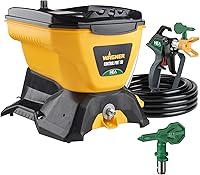
A handheld HVLP suits fences, furniture and trim. A stand airless unit such as the VEVOR 750W moves more paint and covers large surfaces far faster, thanks to its 3000 psi pressure and 1.2 LPM flow.
Switch when a cup refill slows the job more than the spraying.
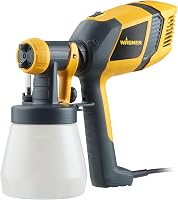
The HomeRight Super Finish Max runs a 450-watt turbine, so it sprays without an air compressor. Its three brass tips and two air caps cover a wide range of coatings.
That makes it a practical match for fences, decks and furniture.
If your projects are cabinets and chairs, compare the best HVLP paint sprayers for furniture. A disposable-cup gun makes color changes quicker.
How do you clean the gun after spraying?
Clean the sprayer as soon as you finish, while the paint is still wet. Empty the cup and flush water-based paint with warm soapy water.
Use the thinner your paint calls for on oil-based finishes.
Wipe the nozzle and air cap with a soft cloth. Clear each passage the manual names.
Let all parts dry fully before storage, since trapped moisture causes corrosion.
What's the quickest cleanup option?
The ScotchBlue Easy Clean gun avoids paint sitting in the passages. Its disposable liner and lid twist off, so cleanup is about a minute and no disassembly is needed.
Color changes are fast too.
It needs a 6-gallon or larger air compressor, an air hose and thread tape for the regulator, which aren't included. Use it with water-based paints only.
For heavier outdoor jobs, a bigger unit covers more ground.
The VEVOR's detachable pump body cleans with the included brush. Its extension pole reaches high spots without a ladder.
That saves time and effort on large exterior projects.
How do you store an Avanti HVLP sprayer?
Store the gun clean and dry, with the cup empty and the lid off. Hang it or set it on a shelf so the nozzle isn't resting on anything.
A dry, frost-free spot keeps the seals from cracking.
Follow the manual's lubrication advice if it gives any. Don't store thinned paint in the cup; it separates and clogs the passages.
A short flush before storage keeps the next job simple.
The short version of how to use an Avanti handheld HVLP paint sprayer
Thin to the manual's ratio, set the nozzle and air cap, spray thin overlapping coats and clean up right away. Those four habits give you an even finish and keep the gun ready for the next job.
Start on scrap to tune the mix and the pattern. Then work across the surface in steady passes.
Rinse and dry the parts before storage. For a wider comparison, read how to use a handheld paint sprayer.
Frequently asked questions
Can I use an Avanti HVLP sprayer for walls?
It can cover a wall, but a handheld HVLP holds only a small cup and needs frequent refills. For a whole room or a long fence, a stand airless model like the VEVOR covers far more surface per fill.
Does an HVLP sprayer need an air compressor?
Most handheld HVLP sprayers run their own turbine motor, so no separate air compressor is needed. You plug the gun in and spray.
Check your model's manual, since some air-assisted guns do require a compressor.
How much should I thin paint for an HVLP sprayer?
Thin only as much as your model's manual allows, adding a little at a time and stirring well. Too much thinner weakens the finish.
Test on scrap first, because latex usually needs more thinning than stain or sealer.
What causes a splotchy finish from an HVLP sprayer?
Thick paint, a clogged nozzle, too fast a stroke or holding the gun too close all cause splotches. Thin the paint, clear the tip, keep the gun about 6 to 8 inches away and overlap each pass by half.
How do I clean an Avanti HVLP sprayer?
Empty the cup, flush the gun with warm water or the thinner your paint calls for, and wipe the nozzle and air cap. Clean it right after spraying so paint never hardens inside the passages.
Store the parts dry.