How to Use a Handheld Paint Sprayer
To use a handheld paint sprayer, fill the cup, set the spray pattern and flow for your coating, and hold the gun 6 to 12 inches from the surface while moving it at a steady speed. Overlap each pass by about half and keep the trigger released at the end of every stroke.
On this page (10 sections)
- What do you need before you start spraying?
- How do you set up a handheld paint sprayer?
- How do you choose the right spray pattern and flow?
- How do you hold the gun and move it across the surface?
- How do you avoid runs, sags and overspray?
- Which handheld paint sprayer fits which job?
- How do you spray different materials and surfaces?
- How do you clean and store a handheld paint sprayer?
- What should you do when the spray pattern goes wrong?
- The short version
To use a handheld paint sprayer, fill the cup, set the spray pattern and flow for your coating, and hold the gun 6 to 12 inches from the surface while moving it at a steady speed. Overlap each pass by about half and release the trigger at the end of every stroke.
A handheld HVLP sprayer is light enough to carry and quick to set up, so it suits fences, doors, trim and furniture as well as walls. The main skill is in the settings and the movement, not in the machine.
What do you need before you start spraying?
Gather the paint, a strainer, masking supplies, a test board and the right nozzle before you load the cup. Most problems on a first spray job come from preparation that was skipped.
Cover floors, furniture and anything within a few feet of the work area with drop cloths. Overspray travels farther than most people expect, so mask windows and outlets too.
Have cardboard or scrap wood ready for a test pattern. Wear eye protection and a respirator rated for paint vapors, and work in a space with moving air if you can.
Check that the paint suits the sprayer. A handheld turbine model like the FLEXiO 595 sprays most unthinned interior and exterior latex with its iSpray nozzle, so a separate thinner is often unnecessary.
How do you set up a handheld paint sprayer?
Fill the cup no more than about three-quarters full, attach the nozzle firmly and connect the gun to the turbine or power unit. A loose nozzle or overfilled cup is a common cause of spitting and drips.
Stir the paint thoroughly first. If it looks thick, strain it and test a small amount through the nozzle before filling the cup.
Match the nozzle to the job. Broad surfaces call for a wide iSpray-style nozzle, while trim and furniture do better with a detail nozzle that lays down a finer mist.
Check the cup seal and lock the lid down. On models with a Lock-N-Go fitting, push the gun onto the turbine until it clicks so it can't work loose mid-job.
How do you choose the right spray pattern and flow?
Start with a horizontal or vertical fan, set the flow low and raise it until the coat looks even. A round pattern suits spots and edges, not open walls.
Spray a test strip on cardboard from the same distance you'll use on the real surface. Adjust the flow knob a quarter turn at a time until the paint covers without running.
Thin coatings like stains and sealers need less flow and a lower speed, while thick latex needs more power. The Wagner FLEXiO 595 has 9 speed settings for exactly this, and the FLEXiO 575 offers a two-speed turbine with low for stains and high for paint.
Keep the pattern size matched to the surface. A wide fan covers a wall quickly; a narrow fan keeps paint off adjacent trim.
How do you hold the gun and move it across the surface?
Hold the sprayer level and parallel to the surface, keep the wrist steady and move the whole arm. The gun should stay at the same distance for the full stroke.
Pull the trigger just before the spray reaches the edge of the work and release it just after the pass ends. That keeps the heavy first and last drops off the wall.
Work in smooth, even strokes at a moderate pace. Rushing leaves thin patches; moving too slowly floods the surface.
Overlap each pass by about half the fan width. For vertical surfaces, spray top to bottom in overlapping lanes, and for horizontal surfaces like a deck or fence rail, work along the length.
Bend your knees or step sideways rather than fanning with the wrist. A wrist flick changes the angle and creates a tapered coat.
How do you avoid runs, sags and overspray?
Keep the gun moving, hold the right distance and spray thin coats to prevent runs. Sags and drips usually come from too much paint in one spot or a gun held too close.
Check the surface every few passes for wet buildup. If a run starts, stop spraying that area and let it dry before sanding it back.
Overspray is the fine mist that drifts past the target. Reduce it by matching the flow to the coating, keeping a steady distance and spraying when the air is calm.
Wind is the main enemy outdoors. Pick a still morning for fence and siding work, and keep the gun angled so the mist blows away from cars, plants and windows.
For large outdoor runs, our guide to how to paint a fence with a sprayer walks through the order of passes and drying time.
Which handheld paint sprayer fits which job?
The Wagner FLEXiO 595 is the most versatile of the three, with two nozzles and 9 speed settings for paint and stain work. The 575 is a simpler two-speed option for bigger exterior surfaces, and the QX1 is a light gun for stains and small craft projects.
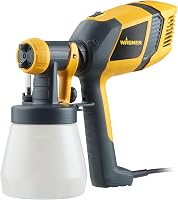
The FLEXiO 595 comes with an iSpray nozzle for broad areas like walls, ceilings and siding and a Detail Finish nozzle for cabinets and furniture. Wagner says its X-Boost turbine sprays unthinned paint and covers an 8 x 10 wall in about 5 minutes.
The FLEXiO 575 uses one iSpray nozzle and switches between low speed for stains and high speed for latex. It's a sensible step up for a homeowner with a lot of fence or siding to cover.
The Control Spray QX1 holds 20 ounces and is built for light-bodied stains, sealers, urethanes and thinned craft paints. It's the pick for furniture, décor and lattice rather than full walls.
If you're still comparing machines, our roundup of the best paint sprayer for home use covers the wider field.
How do you spray different materials and surfaces?
Set the gun for the coating first, then adjust your distance and pace to the surface. Latex paint, stain and clear finishes each behave differently.
Latex paint is thick, so use the iSpray nozzle and a higher speed, and keep the gun moving to stop runs. Solid stains and sealers are thinner, so lower the flow and use a slower speed for even coverage.
On vertical surfaces like a fence or siding, work top to bottom so drips run into fresh paint rather than dried coats. On horizontal surfaces, spray in long lanes and keep the overlap tight.
For trim and furniture, switch to a detail nozzle and a narrower fan. Hold the gun closer to small pieces but keep the stroke short and consistent.
If you plan to use a compressor-driven gun instead of a turbine model, the settings work differently. See how to use an air paint sprayer for the pressure and thinning steps.
How do you clean and store a handheld paint sprayer?
Flush the gun, nozzle and cup with the right solvent as soon as you finish, before the paint sets. A ten-minute cleanup saves an hour of scraping later.
For water-based paint, rinse with warm soapy water and run clean water through the nozzle until it sprays clear. For oil-based finishes, use the solvent named on the can.
Take the nozzle off and clean the air passages with a soft brush. Don't poke them with wire, which can enlarge the holes and spoil the pattern.
Wipe the cup and lid, then let every part dry fully before reassembling. Store the gun and turbine in the case or a dry cabinet so dust doesn't block the nozzle.
Check the cup seal for cracks at the end of each job. A worn seal lets paint weep past the lid and causes sputtering on the next use.
What should you do when the spray pattern goes wrong?
Stop, clean the nozzle and test again on cardboard when the pattern spits, splatters or turns uneven. Most faults trace back to a partial clog or a loose fitting.
Sputtering usually means air is getting in, so check the cup seal, lid and nozzle lock. A split pattern often means the nozzle is partly blocked on one side.
If the paint looks too thick and the gun struggles, thin it slightly or raise the speed on a variable model. If it runs on the surface, lower the flow and speed up your pass.
Uneven coverage can also come from holding the gun at an angle. Keep it square to the surface and check your distance with a test pass.
The short version
Learning how to use a handheld paint sprayer comes down to preparation, the right settings and a steady arm. Fill the cup partway, set the pattern and flow for the coating, and keep the gun moving at a constant distance with a half-pass overlap.
For a do-it-all gun, the FLEXiO 595 covers walls, fences, cabinets and trim with its two nozzles and 9 speeds. Choose the FLEXiO 575 for straightforward exterior paint and stain work, or the Control Spray QX1 for furniture, décor and lattice.
If fences are the main job, compare the best paint sprayers for fences before you commit.
Clean the gun the same day you spray, store it dry and check the nozzle before the next coat. That routine keeps the pattern even and the finish smooth job after job.
Frequently asked questions
How far should you hold a handheld paint sprayer from the surface?
Hold it about 6 to 12 inches away and keep that distance steady for the whole pass. Too close floods the surface and causes runs, while too far lets the paint dry in the air before it lands.
Can you spray a ceiling with a handheld paint sprayer?
Yes, but wear eye protection and expect more overspray overhead. A flexible nozzle like the iSpray on the FLEXiO 595 handles broad ceiling areas, and a cup liner makes the cleanup afterward quicker.
How long should paint dry between spray coats?
Follow the paint can, which usually gives 1 to 4 hours for a recoat. Spray two thin coats rather than one heavy pass, and wait longer in humid weather before adding the second.
Do you need to strain paint before spraying it?
Strain older or partly used paint through a mesh filter to catch skin and grit. Clean paint straight from a fresh can usually goes in without straining, but a quick check with a stir stick helps.
What should you do if the spray pattern sputters or spits?
Stop and check the nozzle, cup seal, and fluid passage for clogs or loose fittings. A partly blocked nozzle is the usual cause, so clean it and test the pattern on cardboard before going back to the wall.