How to Use an Airless Paint Sprayer on a House Exterior
Set the pump to the lowest pressure that gives a full fan, then spray each section in even overlapping passes. Protect the house first, spray the paint unthinned when the pump allows it, and keep the gun moving so the siding gets an even coat.
On this page (9 sections)
- How do you prep a house exterior for an airless sprayer?
- What paint and tip setup works for exterior walls?
- How do you set pressure and prime an airless sprayer?
- How do you spray exterior siding in even passes?
- How do you reach peaks and second stories safely?
- How do you avoid overspray and drips on an exterior?
- How do you clean and store an airless sprayer after exterior paint?
- Which airless sprayer suits a house exterior job?
- What mistakes should you avoid when spraying exterior paint?
To use an airless paint sprayer on exterior siding: protect the house, strain the paint, set a low pressure with the right tip, and spray in overlapping passes. Flush the pump as soon as you stop so the paint never dries inside it.
That order matters more than the spraying itself. Most exterior jobs go wrong in the setup and cleanup, not in the passes along the wall.
The steps below walk through a house exterior from first mask to final flush.
How do you prep a house exterior for an airless sprayer?
Cover everything the fan can reach, then fix the surface before paint goes on. Overspray travels farther than most people expect, so masking comes first.
Tape off windows, doors, light fixtures, outlets and downspouts. Use canvas drop cloths on walkways, shrubs and parked cars, and weigh the edges so wind doesn't lift them.
Move furniture and grills away from the walls.
Scrape loose paint, sand rough spots and fill cracks with exterior filler. Wash the siding and let it dry completely.
Spraying over damp wood or dirty vinyl traps moisture and makes the new coat fail early.
Check the weather forecast. Pick a dry day with light wind and temperatures inside the paint maker's range.
Wind blows the fan off target and dries the paint before it lands.
What paint and tip setup works for exterior walls?
Spray unthinned exterior paint with a tip sized to the coating. A pump rated for unthinned paint gives a thicker, more durable coat than thinned material.
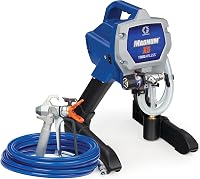
The Graco Magnum X5 and X7 both spray paint unthinned at high pressure. So does the Wagner Control Pro 130.
Strain the paint through a mesh bag or the inlet strainer before loading it, which catches skin and grit that would clog the tip.
The 515 tip included with these sprayers covers siding well. A wider fan speeds up large flat walls; a narrower tip suits trim and edges.
Match the tip to the coating thickness and test on scrap board first.
Thinning is a last resort. If the pump won't move the paint at full pressure, a small amount of water in latex may help, but check the paint maker's guidance before adding any.
How do you set pressure and prime an airless sprayer?
Prime the pump until paint flows from the gun, then lower the pressure until the fan just holds its shape. Over-pressuring wastes paint and causes heavy overspray.
- Place the suction tube in the paint bucket. The flexible suction tube lets the Graco Magnum X5 and X7 draw straight from a 1 or 5 gallon bucket, while the Wagner Control Pro 130 feeds from its built-in hopper.
- Turn the pressure up and trigger the gun into a waste bucket until paint runs steady.
- Lock the gun open and let the pump build pressure.
- Release the trigger and test the fan on cardboard.
- Back the pressure down slowly until the edges of the fan start to break up, then nudge it up a little.
That setting gives a full fan with the least pressure. A fan that spits or tails means too little pressure or a partly clogged tip.
Reverse the tip to clear a clog, then keep spraying.
How do you spray exterior siding in even passes?
Hold the gun about 10 to 12 inches from the wall and move at a steady speed. Keep the gun square to the surface so the fan stays even.
Work in vertical strips about 4 to 5 feet wide, starting at the top and moving down. Overlap each pass by about half a fan width.
Trigger the gun before the pass starts and release after it ends, so you don't build heavy spots at the edges.
Keep the gun moving at one speed. Stopping or slowing in one place leaves a thick band that shows when the paint dries.
Spray in one direction per coat rather than back and forth.
Let the first coat dry per the paint label before adding a second. Two thin coats outlast one heavy coat on exterior siding, and they dry faster too.
Which sprayer fits a house exterior?
The Graco Magnum X5 is the pick for most homeowners because its pressure control and 75 ft hose reach a second story on smaller houses. The X7 cart adds reach for multi-story homes.
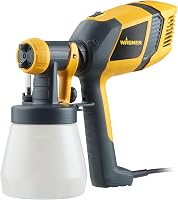
The Wagner Control Pro 130 is the choice for lower overspray on detailed siding.
How do you reach peaks and second stories safely?
Extend reach with hose, not with a ladder stretched past its limit. The X5 supports up to 75 ft of paint hose and the X7 up to 100 ft, so both reach peaks or second stories without a drop in performance.
Set the ladder on firm, level ground and keep three points of contact. Move the ladder rather than leaning far out from the top rung.
Have a second person hold the base on uneven ground.
Keep the hose behind you and off the rungs so it doesn't snag. Don't drag the gun up by its cord or hose.
Spray the high sections first, then work down so drips don't run over fresh paint below.
Skip spraying entirely for spots you can't reach safely from a ladder or scaffold. Brush those areas by hand instead of taking a risk.
How do you avoid overspray and drips on an exterior?
Lower the pressure, narrow the tip and mask more than you think you need. These three changes cut overspray more than any spraying technique.
Keep the gun moving and at the same distance. A gun held too close lays on too much paint and drips; too far and the paint dries mid-air and lands as grit.
Watch the fan edges and stop if they start to tail.
Spray with the wind at your back and work away from freshly painted areas. Hang plastic sheeting on nearby walls and fences the fan can hit.
Check the ground for paint mist at the end of each section.
Wipe drips immediately with a rag. A run that dries overnight is much harder to fix than one caught in the first minute.
How do you clean and store an airless sprayer after exterior paint?
Flush the pump, hose and gun with water while the paint is still wet. Dried exterior paint is much harder to remove and can ruin the pump seals.
- Empty the paint back into its bucket and wipe the suction tube.
- Put the tube in a bucket of clean water and run the pump until clear water comes from the gun.
- Use the PowerFlush adapter on the Graco units to connect a garden hose for a faster rinse.
- Flush the gun and tip separately and reverse the SwitchTip to clear any clog.
- Run Pump Armor storage fluid through the pump before putting it away.
The Wagner Control Pro 130 cleans up the same way: flush and rinse the system so it's ready for the next job. Store the hose coiled and the gun off the ground.
Which airless sprayer suits a house exterior job?
Pick the sprayer by the size of the house and the reach you need. All three models here spray exterior paint unthinned, and the Graco models draw from a 1 or 5 gallon bucket.
The Graco Magnum X5 is the best all-round choice for most homeowners. Its fully adjustable pressure control lets you dial in the fan for siding or trim, and the 75 ft hose reaches peaks and second stories.
The X5 suits projects up to 10 gallons in size.
The Graco Magnum X7 Cart is the better fit for larger or multi-story homes. Its cart makes it easier to move around the job, and the longer hose reach covers second and third stories.
Graco rates it for up to 125 gallons per year, so it handles several houses a season.
The Wagner Control Pro 130 Power Tank produces up to 55% less overspray than traditional airless sprayers, according to Wagner. That makes it the pick for detailed siding and trim where overspray is a worry.
Its 1.5 gallon hopper and 25 ft hose suit big projects without stopping.
Before you buy, compare models in our guide to the best paint sprayer for an exterior house. If fences are part of the job, see the best paint sprayer for fences and read how to paint a fence with a sprayer for the technique changes.
What mistakes should you avoid when spraying exterior paint?
The most common mistakes are spraying too fast, over-pressuring the pump and skipping the flush. Each one shows up in the finish or shortens the pump's life.
- Spraying without masking: overspray lands on windows, cars and shrubs.
- Too much pressure: wasted paint, heavy mist and runs.
- Holding the gun still: thick bands and drips.
- Skipping the strainer: clogged tips and spitting fans.
- Leaving paint in the pump: hardened paint seizes the seals.
If you're switching from a handheld unit, read how to use a air paint sprayer first for the basics of fan control and distance. The airless steps build on the same habits with more pressure and paint volume.
Once the pump is clean and stored, the job is done. Check the walls in good light the next day and touch up any thin spots by hand before the paint fully cures.
Frequently asked questions
Do I need to thin paint for an airless sprayer?
Not with a pump rated for unthinned paint. The Graco Magnum X5 and X7 and the Wagner Control Pro 130 all spray paint unthinned, so skip thinning and just strain the paint before you load it.
What tip size should I use for exterior siding?
Start with the tip supplied in the box and step up for thicker coatings. A 515 tip ships with the Graco sprayers and the Wagner, and a wider fan covers siding faster while a smaller one suits trim.
Can I spray a two-story house exterior?
Only within the hose reach the pump supports. The Graco X5 handles up to 75 ft of hose and the X7 up to 100 ft, so both reach second-story siding without losing performance.