How to Use a Graco Airless Sprayer
To use a Graco airless sprayer, set up on a stable surface, prime the pump until paint flows, dial in the lowest pressure that gives a clean fan, then spray even overlapping passes. Flush the pump with water or solvent when the job ends, and store it with Pump Armor.
On this page (8 sections)
- What do you need before you start a Graco airless sprayer?
- How do you set up and prime a Graco airless sprayer?
- How do you set pressure and pick a tip?
- How do you spray an even finish?
- Which Graco sprayer suits your job?
- How do you clean and store a Graco airless sprayer?
- How do you fix common problems?
- How do you keep a Graco airless sprayer working year after year?
To use a Graco airless sprayer, set up on a stable surface, prime the pump until paint flows, dial in the lowest pressure that gives a clean fan, then spray even overlapping passes. Flush the pump with water or solvent when the job ends, and store it with Pump Armor.
The steps are the same across Graco's Magnum line, so once you learn how to use a Graco airless sprayer you can run any of the models in this range. The order matters more than the gear: setup, prime, pressure, technique, cleanup.
What do you need before you start a Graco airless sprayer?
Gather a stable work area, your paint or stain, a 1 or 5-gallon bucket, drop cloths, a paint filter, and the tip and hose that came with the sprayer. A short test board helps you dial in the fan before aiming at the wall.
Graco's Magnum models ship with the basics, including an SG2 metal spray gun, a RAC IV 515 SwitchTip, a 25 ft Duraflex hose, Pump Armor storage fluid, and a PowerFlush adapter. You supply the coating, masking materials, and a place to set the unit.
Keep the power cord and outlet away from where you'll be spraying. Choose a level spot for the pump so it doesn't tip while the hose moves.
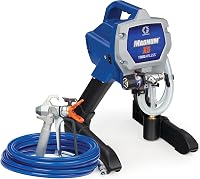
A stand model like the X5 sits close to the floor and takes up little room, while the cart model rolls on its own wheels and needs a wider path.
Lay drop cloths over everything within reach of the hose, not just the wall. A 25 ft hose swings wider than most people expect when the gun is at full extension.
How do you set up and prime a Graco airless sprayer?
Turn the prime/spray valve to prime, put the return tube in a bucket of coating, and run the pump until fluid flows back without air. Then switch to spray and trigger the gun into the bucket until paint reaches the tip.
Here's how to prime an airless paint sprayer without making a mess:
- Place the suction tube in the paint and the return tube in the same bucket.
- Set the valve to prime and run the pump at low pressure.
- Let the fluid circulate until the return flow is steady.
- Switch to spray and trigger the gun into the bucket until paint flows from the tip.
- Lock the gun and wipe the tip.
Our guide to how to prime an airless paint sprayer walks through the same steps in more detail. Prime outdoors or over a drop cloth, because the first pulses can spatter.
The flexible suction tube on both Magnum models lets you drop it straight into the paint can. There's no hopper to fill and no paint to pour, so priming starts from the bucket you'll be spraying from.
How do you set pressure and pick a tip?
Start at the lowest pressure setting and raise it slowly until the fan is complete. A properly set airless sprayer lays down a full-width fan with soft edges and no streaks in the middle.
If the fan is narrow or has fingers, raise pressure a step. If it's misting heavily or the paint runs, drop it back.
Graco's adjustable pressure control lets you find that point for each coating.
The tip controls the width of the fan. A RAC IV 515 tip sprays about 10 inches wide, which suits fences and siding.
Use a smaller tip for trim and doors. Thin stains need less pressure than thick latex.
If the tip clogs, turn the switch to reverse and spray briefly into the bucket to clear it. Then switch back and keep working.
The Graco TrueCoat 360 Spray Tip Kit covers TrueCoat 360 models 26D280, 26D281, and 26D283, and its reversible tips let you clear clogs without removing anything. It is only for TrueCoat 360 handheld sprayers, not the Magnum X5 or X7.
What does the tip kit include?
The kit ships with two tips, a wide pattern and a narrow one, plus a color matching inlet filter and a replacement filter. The wide tip is meant for surfaces 10 to 12 inches across.
The tips install without tools, so you can swap from wide walls to narrow trim in seconds.
How do you spray an even finish?
Hold the gun 10 to 12 inches from the surface and keep it square, then spray overlapping horizontal or vertical passes at a steady speed. Move your whole arm, not just your wrist.
Trigger the gun before the stroke starts and release it before the stroke ends. Overlap each pass by about half a fan width so there are no lap marks.
Spray edges and trim first, then fill in the field. Work in sections you can reach without leaning around the hose.
Keep the gun moving; a paused gun leaves a paint blob.
For a second coat, follow the paint's recoat time and repeat the same passes. Two lighter coats lay flatter than one heavy coat and are less likely to sag.
Which Graco sprayer suits your job?
For a homeowner tackling a deck, a fence, or a few rooms, the Graco Magnum X5 is the best fit. It sprays unthinned paint at up to 3000 psi and draws straight from a 1 or 5-gallon bucket.
Its flexible suction tube means you can drop it into your paint can and spray without a separate hopper. The X5 supports up to 75 ft of hose for reaching a second story or a peak.
That's more than enough for a fence line or a two-car garage.
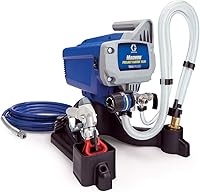
If you're painting a multi-story house or spraying all year, step up to the cart model. The Graco Magnum X7 Cart handles up to 125 gallons a year and supports 100 ft of hose.
Both models are on the same pump platform, so the technique you learn on one transfers to the other. Compare their reach and annual limits in our Graco Magnum X5 vs X7 breakdown.
If you're still choosing a first sprayer for home projects, our guide to the best paint sprayer for home use covers the trade-offs. For tips on a different pump design, see how to use an air paint sprayer.
How do you clean and store a Graco airless sprayer?
Flush the pump and hose with water for latex paint or a solvent for oil-based coatings until the fluid runs clear. Clean the tip and inlet filter, then run Pump Armor through the pump before storage.
Graco's PowerFlush adapter connects to a garden hose for faster cleaning. Use it to rinse the pump body, then finish the hose and gun by hand.
Steps for a clean shutdown:
- Turn the valve to prime and put both tubes in a bucket of water or solvent.
- Run the pump until the return water runs clear.
- Switch to spray and trigger the gun until clear water comes out.
- Clean the tip, gun filter, and inlet strainer.
- Run Pump Armor through the pump, then close the valve.
Clean the tip with a soft brush in the right solvent. Don't poke it with a wire, which can change the opening and the fan.
How do you fix common problems?
Most problems trace to pressure, a clogged tip, or air in the system. Fix those first before you take the pump apart.
If the fan is uneven, check the tip for a partial clog and clear it with the reverse setting. If paint sputters, the suction tube may be pulling air, so seat it fully in the bucket.
If the pump won't build pressure, confirm the valve is in the spray position and the inlet strainer isn't blocked. Loose connections also let air in, so tighten the hose and gun fittings.
The X5 and X7 both top out at 3000 psi, so a pump that won't build pressure at all points to a valve or seal problem, not a weak motor.
Thick coatings may need a larger tip rather than more pressure. A too-small tip on heavy paint strains the pump and shortens its life.
Watch the return flow when priming; weak flow usually means the inlet screen is dirty or the suction tube isn't sealed.
How do you keep a Graco airless sprayer working year after year?
Flush it every time you stop, store it with Pump Armor, and keep the tip and filter clean. These three habits do more for pump life than any single upgrade.
Don't let paint sit in the hose or gun between coats for long. Wrap the gun in a damp cloth for a short break, then flush when you stop for the day.
Store the unit indoors, away from freezing temperatures, with Pump Armor in the pump. A frozen pump can crack, and paint left in the lines hardens into a blockage.
The X5 weighs 15 pounds and the X7 Cart weighs 26 pounds, so both are easy to lift onto a shelf when the season ends. Graco covers both against manufacturer defects for one year.
When you're ready to learn how to use a Graco airless sprayer for a bigger job, the same routine scales. Set up, prime, find your pressure, spray even passes, and clean up.
Pick the X5 for decks, fences, and rooms up to 10 gallons a year, or the X7 Cart when the house is tall and the paint volume is high. The TrueCoat 360 tip kit is only for TrueCoat 360 handheld sprayers and does not fit the X5 or X7, so choose tips for your Magnum model to switch between wide walls and narrow trim.
Frequently asked questions
What pressure should you spray paint at?
Start low and raise it slowly until the fan is fully formed with no fingers or gaps. Use only as much pressure as the coating needs, because higher pressure speeds wear and adds overspray without improving the finish.
Can you spray latex paint without thinning it?
Yes. Graco's piston pumps are built to spray paint unthinned at high pressure, so a typical interior or exterior latex goes straight from the bucket into the hose.
Thinning is only for coatings the paint label says need it.
How do you clean a Graco airless sprayer after use?
Flush the hose and pump with water for latex or a solvent for oil-based paint until the fluid runs clear. Clean the tip and filter, then store the pump with Pump Armor to stop rust and seals from sticking.
How long does it take to set up an airless sprayer?
Plan on 10 to 15 minutes to set up and prime before the first pass, and about the same to flush and store when you stop. Running through that routine each time is what keeps the pump reliable.