How to Use a Cordless Paint Sprayer
To use a cordless paint sprayer, charge the battery, load the cup with paint or stain, set the nozzle and flow to a test pattern, and spray in steady overlapping passes. Finish with a full flush of the gun so paint doesn't dry inside it.
On this page (8 sections)
- What should you prepare before you spray?
- How do you charge and fit the battery?
- How do you load paint into the cup?
- How do you set the spray pattern and flow?
- How do you spray in even passes?
- How do you clean a cordless paint sprayer?
- Which sprayer and tips should you buy?
- Which mistakes should you avoid?
To use a cordless paint sprayer, charge the battery, load the cup with paint or stain, set the nozzle and flow to a test pattern, and spray in steady overlapping passes. Finish with a full flush of the gun so paint doesn't dry inside it.
A cordless sprayer saves the cord drag and extension leads, but it still needs a real setup. Get the battery, paint and test pattern right and the rest of the job goes quickly.
Learning how to use a cordless paint sprayer well comes down to a short setup, a smooth spraying rhythm and a quick clean-up.
What should you prepare before you spray?
Clear and mask the area first, then charge the battery and gather paint, a test board, a stir stick and rags. Preparation is the part most beginners skip, and it decides how much clean-up follows.
Move furniture, plants and vehicles well away from the work zone. Cover the ground with drop cloths and mask windows, trim and hardware with painter's tape.
A light wind spreads overspray further than most people expect, so keep the masked zone wide.
Check the paint can for the maker's spraying guidance. Most water-based latex paints spray without thinning, but some thick products need a splash of water.
Stir the paint fully so color and consistency are even.
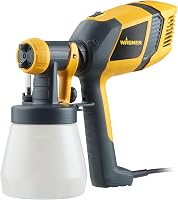
Charge one battery and keep the second on the charger, so a long wall or fence doesn't stop halfway. A full charge on the Wagner FLEXiO 3550 paints 128 sq ft or stains 240 sq ft.
How do you charge and fit the battery?
Snap the battery onto the gun until it clicks, and keep the spare charging. A cordless sprayer only works as long as its battery has charge, so plan the job around that limit.
The Wagner FLEXiO 3550 includes two 18V 2Ah batteries and a charging station. That spare matters on larger projects: when one battery runs down, swap it out and put the flat one on the charger.
Check the battery contacts are clean and dry before fitting. Push it in until it seats fully, because a loose battery can cut power mid-pass.
Switch the gun on and confirm the settings display or speed control responds.
Don't leave a battery on the charger for days. Charge it, take it off and store it in a dry place away from heat.
How do you load paint into the cup?
Unscrew the cup, fill it to the marked line, and screw it back on firmly. Overfilling causes leaks and drips; underfilling means frequent refills in the middle of a wall.
The Wagner FLEXiO 3550 has a 1.5-quart cup. Fill it to about three-quarters so there's air space for the sprayer to work, and wipe the rim before closing.
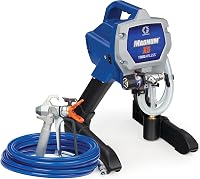
For bag-based sprayers, the Graco TrueCoat 360 uses FlexLiner bags instead of an open cup. Drop a bag into the cup, pour in paint, and seal it before fitting the lid.
The bags keep paint contained and make clean-up easier.
Screw the lid on tight and tip the gun gently to check for leaks. If paint seeps at the threads, take the lid off, clean the rim and refit it.
Don't over-tighten, since a cracked cup or lid is hard to replace mid-job.
How do you set the spray pattern and flow?
Match the nozzle to the job, then set the pattern and flow on a test board. Pattern size and orientation are the two settings that change the most between walls, trim and fences.
The Wagner FLEXiO 3550 includes two nozzles. The iSpray nozzle is for broad surfaces like walls, ceilings and siding, and the Detail Finish nozzle is for smaller work like cabinets and furniture.
Start with the iSpray nozzle for a wall or fence.
The gun's pattern control turns between horizontal and vertical, and between wide and narrow. Set a vertical fan for up-and-down passes on a wall and a horizontal fan for side-to-side passes on a fence.
A wide fan covers faster; a narrow fan gives more control near edges.
The FLEXiO 3550 also has 5 speed settings and variable paint flow. Open the flow for a full coat and close it for lighter passes.
Always test the setting on scrap cardboard before touching the real surface.
Which sprayer settings suit which surface?
A wide vertical fan and medium flow suit a flat wall. A wide horizontal fan suits a fence or long board.
A narrow fan and low flow suit trim, doors and furniture edges where overspray would be a problem.
Thin material like stain needs less flow than thick latex. If the coat looks watery or the fan is uneven, close the flow a little and test again.
How do you spray in even passes?
Hold the gun 8–12 in from the surface and move at a steady speed, overlapping each pass by about half. A consistent distance and overlap is what stops streaks and blotches.
Start the pass before the trigger pulls and release the trigger after the pass ends. That trick keeps the edges from building up a heavy band.
Move your whole arm from the shoulder rather than flicking your wrist.
Keep the gun square to the surface. Angling it up or down makes one side of the fan heavier than the other.
On a wall, work in long top-to-bottom strips and keep going in the same order so you don't miss a section.
For a second coat, let the first one dry as the paint maker advises. A wet second coat over a soft first one can sag or run.
A focused walkthrough is in our guide to how to use a air paint sprayer, which shares most of the same technique.
How do you avoid runs and drips?
Slow down the flow and speed up the pass. A run means too much paint in one spot, so thin the coat or open the flow less.
Keep the gun moving and don't pause at the end of a pass.
How do you spray a fence without a cord?
Cordless sprayers suit fencing well because there's nothing to drag along the line. The FLEXiO 3550 stains a 40x6 fence on a single charge.
Our guide to how to paint a fence with a sprayer covers board spacing and edges.
How do you clean a cordless paint sprayer?
Flush the gun with warm water as soon as you finish, before the paint skins over. A ten-minute clean now saves a stripped-down repair later.
Empty leftover paint back into its can or a sealed container. Wipe the cup and lid, then run warm water through the gun into a bucket, triggering it in short bursts until the water runs clear.
Work the water through the nozzle too.
The Wagner FLEXiO 3550 ships with a replacement seal and gun lubricant. Lubricate the moving parts after cleaning as the maker advises.
Take the nozzle off and soak it if paint has started to set.
Dry every part fully before reassembling. Store the gun with the battery removed and the nozzle off so air can circulate.
Never leave paint sitting in a sprayer between coats for a long break.
Which sprayer and tips should you buy?
Start with a cordless HVLP sprayer for home and yard projects, and add a drill-powered unit or a tip kit only if your work calls for it. The Wagner FLEXiO 3550 is the most complete cordless setup here, with two batteries and two nozzles in the box.
The Graco TrueCoat 360 Drill-Powered runs from a drill you already own, so there's no battery to charge. It sprays paint and stain without thinning and handles projects up to 2 gallons.
That suits someone who already has a drill and wants fewer batteries to manage.
The Graco TrueCoat 360 Spray Tip Kit adds a wide and a narrow tip plus a replacement filter. The reversible tip clears clogs by twisting it and spraying in reverse.
That's a useful spare for TrueCoat 360 models 26D280, 26D281 and 26D283.
For bigger indoor work, compare the options in our roundup of the best paint sprayer for home use. For fencing specifically, our best paint sprayer for fences picks cover longer runs.
Which mistakes should you avoid?
Thin coats, steady passes and a full clean-up are what separate a smooth finish from a streaky one. The common mistakes are easy to avoid once you know them.
Don't overfill the cup or over-tighten the lid. Don't spray without a test pattern on cardboard.
Don't hold the gun too close, which causes runs, or too far, which dries the paint before it lands and leaves a gritty surface.
Don't stop mid-pass with the trigger held. Don't let paint sit in the gun during a long break.
And don't skip the nozzle soak if the paint is slow to flush.
If a finish looks rough, let it dry and sand lightly before the next coat. Most cordless sprayer problems come down to too much paint, too little overlap or a dirty nozzle.
Learning how to use a cordless paint sprayer is mostly about setup and rhythm. Charge both batteries, mask well, test your pattern and keep the gun moving.
Flush it the moment you finish and your next job will be quicker still.
Frequently asked questions
How much paint does a cordless paint sprayer use?
Expect more than brushing the same surface, since a sprayer puts down a wide coat with overspray. The Wagner FLEXiO 3550 covers an 8x10 wall in 5 minutes and paints 128 sq ft on one battery charge, so plan extra paint for large jobs and buy enough for two coats.
Do you have to thin paint for a cordless paint sprayer?
Not always. The Graco TrueCoat 360 sprays paint and stain without thinning, and the Wagner FLEXiO 3550 handles most unthinned latex.
Test on cardboard first and add a little water only if the fan looks dry or spotty.
How do you stop lines and streaks when spraying?
Keep the gun the same distance from the surface and overlap each pass by about half. Move your arm from the shoulder instead of flicking your wrist, and pull the trigger before the pass and release after it ends so the edges stay even.
How long does a cordless sprayer battery last?
The Wagner FLEXiO 3550 runs about 7 minutes or 128 sq ft per charge when painting, and 20 minutes or 240 sq ft when staining. Charge the second battery while you use the first so a large job doesn't stall.
Can you spray a fence with a cordless paint sprayer?
Yes. A cordless sprayer is well suited to fencing because there are no cords to drag along the line.
The Wagner FLEXiO 3550 stains a 40x6 fence on one charge, though rough boards soak up more finish than flat surfaces.