How to Use an HVLP Paint Sprayer
To use an HVLP paint sprayer, hook the gun to the turbine, fill the cup, and test the pattern on cardboard before touching the work. Set the fan and flow for a thin, even coat, spray in parallel passes with the gun about 6 to 8 inches away, then clean the gun right after you finish.
On this page (9 sections)
- What do you need before you start an HVLP sprayer?
- How do you set up the turbine and gun?
- How do you choose the nozzle and prepare the paint?
- How do you test and adjust the spray pattern?
- How do you spray an even coat step by step?
- How do you spray furniture and trim with HVLP?
- How do you clean an HVLP gun after spraying?
- What causes common HVLP spraying problems?
- Which HVLP sprayer fits your job?
To use an HVLP paint sprayer, connect the gun to the turbine, load the cup, and test the spray pattern on scrap cardboard before you point it at your project. Set the fan and flow so the coating lands as a thin, even coat, then spray in steady parallel passes.
When you learn how to use an HVLP paint sprayer this way, the first pass is a test rather than a mistake.
HVLP means high volume, low pressure. A turbine pushes a lot of air at low pressure, which carries the paint to the surface with less bounce-back than a high-pressure gun.
That gentler delivery is why HVLP suits furniture, trim, doors and fences as well as walls.
What do you need before you start an HVLP sprayer?
You need the turbine, the hose, the gun with its cup, the right nozzle, your coating, a strainer and test cardboard. Add masking supplies and a respirator for indoor work.
Lay everything out before you plug in, so you aren't hunting for tools once the cup is full.
- The turbine unit and its power cord
- The air hose, plus the air control valve if the hose has one
- The spray gun with the cup and lid
- The nozzle set that matches your coating
- Paint, strainer, stir stick and a small amount of thinner if the maker calls for it
- Cardboard or scrap wood for testing the pattern
- Masking tape, drop cloths and a respirator
Check the gun is clean and the nozzle is snug. A loose nozzle or a clogged air cap is the most common reason a first coat splatters.
How do you set up the turbine and gun?
Set the turbine on a stable surface near the work, connect the hose hand-tight, and fill the cup no more than about three-quarters full. Keep the hose off the floor where you'll walk.
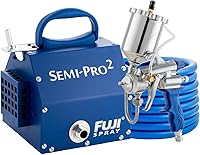
The Fuji Spray Semi-PRO 2 puts the turbine in a metal case with a gun holder on top, so the unit can sit beside you and hold the gun between passes. Its 25-foot hose includes an air control valve, which lets you trim pressure at the gun to reduce overspray and bounce-back.
The Wagner FLEXiO 5000 takes a different layout. Its turbine sits in a stationary base on the ground, and an 11.5-foot hose reaches up to the gun.
That keeps the weight off your hand during long sessions on walls or a fence line.
Screw the cup on firmly and check the lid seal. A cup that leaks air will drip paint or spray unevenly.
Strain the coating through a filter as you pour, especially after it has sat open.
How do you choose the nozzle and prepare the paint?
Match the nozzle to the coating, then test a small amount on scrap before filling the cup. A nozzle sized for thin stain will choke on thick latex, and the reverse will flood a thin finish.
Nozzle sizes are measured in millimeters. The Fuji Spray Semi-PRO 2 ships with a 1.3mm air cap set installed, which suits many solvent and water-based finishes.
The Wagner FLEXiO 5000 comes with two nozzles: an iSpray nozzle for broad coverage on walls and ceilings, and a Detail Finish nozzle for trim, cabinets and furniture.
Thinning is the step most people get wrong. Many HVLP turbines handle unthinned latex, including the FLEXiO 5000, which sprays most unthinned latex and oil-based paints straight from the can.
If your coating is too thick for the nozzle, thin it in small amounts according to the maker's guidance and stir well. Test the mix on cardboard.
If the spray lands in droplets or strings, the material is too thick or the flow is too high.
How do you test and adjust the spray pattern?
Spray a burst on cardboard, then adjust the fan width and flow until you get an even, oval pattern. A good pattern is full across the fan with no heavy center stripe and no spitting at the edges.
Start with the fan control and open the flow slowly.
The Fuji Spray gun has a fan control knob that adjusts the pattern from a small circle to a wide fan and every size between. A wide fan covers a wall fast; a narrow one reaches into trim and edges.
Check these on the test card:
- Shape: a clean oval with soft edges, not a blotchy star.
- Evenness: the same amount of paint across the width.
- Distance: hold the gun about 6 to 8 inches from the card, the same gap you'll keep from the work.
- Speed: move at a steady pace so the coat looks wet but not pooled.
Change one setting at a time. If you open the flow and narrow the fan together, you won't know which fix worked.
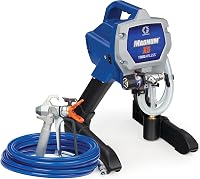
The Wagner Control Spray QX2 offers three spray patterns, horizontal, vertical and round, plus a material flow control, which helps when you move from a flat fence panel to a lattice edge.
How do you spray an even coat step by step?
Spray in parallel passes, overlap each one by about half the fan width, and keep the gun moving at a steady speed. Trigger on before the pass and off after it so you don't build a heavy spot at the ends.
- Mask edges, floors and anything you don't want coated.
- Start at one edge and work in lanes, top to bottom on vertical surfaces.
- Keep the gun level and parallel to the surface, the same distance throughout.
- Overlap each pass by about 50 percent so there are no missed stripes.
- Build two thin coats rather than one heavy coat, letting each flash off as the maker directs.
- Watch for runs at corners and edges, where paint gathers.
Keep your wrist straight and move from the arm or shoulder. Twisting the wrist changes the fan angle and leaves a curved stripe.
On a fence or deck, work with the grain and follow the board lines so overlaps land in less visible places. For a fuller walkthrough of air-driven guns and their settings, see how to use a air paint sprayer.
How do you spray furniture and trim with HVLP?
Switch to a smaller nozzle and a narrower fan, and keep the gun moving in short passes. Fine work rewards a light trigger and a close, steady hand.
The Detail Finish nozzle on the Wagner FLEXiO 5000 is made for trim, cabinets and furniture, where a smooth finish matters more than speed. Turn the flow down and narrow the fan so the coat doesn't flood edges or pool in corners.
Spray disassembled pieces flat where you can. Lay doors and drawer fronts on sawhorses so the finish levels without running.
If you're choosing a gun mainly for this work, the best HVLP paint sprayer for furniture covers models built around fine finishes. Keep a rag and a small brush nearby for touch-ups.
HVLP lays a thin coat, so two light passes usually beat one wet one on vertical faces.
How do you clean an HVLP gun after spraying?
Clean the gun as soon as you finish, before the coating dries in the nozzle and air cap. Dried paint in the air holes is the main cause of a poor pattern on the next job.
Pour leftover coating back into its can through a strainer, or set it aside for proper disposal. Rinse the cup with the thinner or water that suits the coating.
Then flush the gun by spraying clean liquid through it into a bucket or rag. Take the nozzle and air cap off and clean the holes with a soft brush.
Don't poke them with wire, which can enlarge the openings. Wipe the needle and the outside of the gun, then reassemble and store it in its holder or case.
The Wagner FLEXiO 5000 uses a Lock-N-Go system and five cup liners, which speed up color changes and cleanup between coats. The Wagner Control Spray QX2 uses Lock-N-Go and a minimal parts design for quick cleanup and easy color changes.
What causes common HVLP spraying problems?
Most HVLP faults come down to material thickness, gun setup or distance. Fix the cause rather than adding more paint.
- Spitting or splattering: too-thick material, a loose nozzle or cup, or a dirty air cap. Thin slightly, tighten the parts and clean the holes.
- Heavy center stripe: the fan is too narrow or the flow too high. Open the fan and ease the flow.
- Runs and sags: too much material in one pass or the gun held too close. Speed up and add a second thin coat instead.
- Dry, grainy finish: the gun is too far away or the material too thick. Move closer and check the mix.
- Uneven coverage: missed overlaps. Keep each pass about half a fan from the last.
If a fence or deck is the job, our guide to the best paint sprayer for fences covers models set up for stains and outdoor wood. For walls and general household work, the best paint sprayer for home use compares turbine and airless options.
Which HVLP sprayer fits your job?
Pick the Fuji Spray Semi-PRO 2 for the widest range of coatings and the steadiest control, and the Wagner FLEXiO 5000 for large walls and mixed projects. The Wagner Control Spray QX2 is the lightest choice for stains on fences and decks.
Our score weighs specs, features and buyer feedback against what you're shopping for. The Semi-PRO 2 leads here because its 1400W two-stage turbine can handle any type of coating and its fan control covers everything from a spot repair to a wide panel.
When you learn how to use an HVLP paint sprayer, the settings matter more than the model. Set up clean, test the pattern, spray thin and even, and clean the gun the same day.
That routine keeps the finish smooth and the gun ready for the next coat.
Frequently asked questions
Do you have to thin paint for an HVLP sprayer?
Some coatings need thinning and some don't. Turbine models that advertise unthinned latex, like the Wagner FLEXiO 5000, can spray straight from the can.
For others, follow the maker's thinning guidance and test on scrap first.
How far should the gun be from the surface?
About 6 to 8 inches for most coatings. Hold the gun level and move it parallel to the surface, keeping the distance steady so the coat lands evenly.
Overlap each pass by roughly half the fan width.
Can I use an HVLP sprayer indoors?
Yes, but HVLP still puts fine paint mist in the air. Mask surfaces, cover floors, open windows, and wear a respirator.
Clear the room of people and pets until the mist settles and the coating dries.
Why is my HVLP sprayer spitting or splattering?
The usual causes are too-thick material, a loose nozzle or cup, or a dirty air cap. Thin the coating slightly if the maker allows it, tighten the parts, and clean the air holes.
Test the pattern on cardboard before spraying the work.
How much paint does an HVLP sprayer waste?
Less than a high-pressure gun because the low pressure keeps bounce-back down. A 25-foot hose with an air control valve lets you dial pressure at the gun, which cuts overspray on edges and detail.
Expect less waste than a cup gun but more than brushing.