How to Spray Paint Interior Walls Without a Mess
To spray paint interior walls without a mess, empty the room, cover every surface you want to protect, and spray in steady overlapping passes. Test the spray pattern first, keep the gun moving, and clean the sprayer as soon as you finish.
On this page (7 sections)
- How do you prepare a room for spraying interior walls?
- What safety steps matter before you start?
- How do you prepare paint and the sprayer?
- How do you spray interior walls evenly?
- How can you reduce overspray and drips?
- What should you do after spraying?
- Which supplies help you spray a room with less mess?
To spray paint interior walls without a mess, empty the room, cover surfaces that should stay clean, and use steady overlapping passes. Test the spray pattern on cardboard first, keep the gun moving, and clean the sprayer promptly when the job is done.
Spray paint can cover broad wall areas quickly, but airborne paint can settle on floors, furniture, trim, and nearby rooms. Prep takes time, so spraying is most useful when you can clear the space and mask it well.
How do you prepare a room for spraying interior walls?
Remove as much furniture as you can, then cover the floor and everything that stays. Close or mask doorways, windows, outlets, trim, and fixtures before bringing paint into the room.
Take down curtains, wall art, outlet covers, and other removable items. Turn off power at the breaker before removing switch or outlet plates, and keep paint away from exposed wiring.
Use masking paper or plastic sheeting to protect surfaces, and secure the edges with painter's tape. Overlap the coverings so there are no gaps where paint can land.
Cover the floor from wall to wall, including the area near the doorway. Put a second layer near the wall if you expect to walk there during spraying.
What safety steps matter before you start?
Follow the paint label and sprayer manual for ventilation and protective equipment. Keep people and pets out of the work area while spraying and until the room is safe to re-enter.
Spray mist can travel beyond the wall, so don't rely on an open window alone to contain it. Ventilate as directed by the paint manufacturer, and wear the eye, skin, and breathing protection specified for the coating and equipment.
Keep the sprayer, hose, and power cord out of walkways where possible. Plan a route that lets you move around the room without stepping on masking or pulling the hose across wet paint.
How do you prepare paint and the sprayer?
Read both sets of instructions before filling the sprayer. Check that the paint is suitable for the equipment, then strain or thin it only if the paint and sprayer instructions call for those steps.
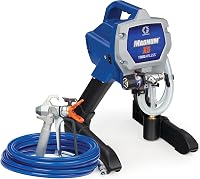
The Graco Project Painter Plus is described as handling paints or stains unthinned at adjustable pressure. Wagner says the Control Pro 130 models can spray a range of unthinned paints and stains, but the paint label and manual still guide your setup.
Choose a bucket and hose position that won't be easy to bump. Keep the lid or container opening clear of dust and debris while you work.
The Wagner Control Pro 130 HEA extension kit includes a 12 in extension wand and 515 and 413 tips. Use only a tip suited to your paint and job, following the manual's setup instructions.
Before spraying a wall, prime the sprayer as its manual directs and check for leaks or loose connections. Practice the trigger and movement on cardboard or another protected surface.
How do you spray interior walls evenly?
Hold the gun square to the wall and move at a steady pace, keeping it the same distance from the surface. Start moving before you pull the trigger, and release it before stopping your arm at the end of each pass.
Use long horizontal or vertical passes, based on the sprayer manual and your room layout. Overlap each pass slightly so you don't leave thin stripes between bands of paint.
Keep the spray moving across the wall rather than aiming at one spot. If paint begins to sag or collect, move faster or adjust the pressure as the equipment instructions allow.
Work one wall at a time, maintaining a wet edge where practical. Avoid reaching across a freshly painted area, and plan your path toward the exit.
How do you spray corners and edges?
Spray edges and corners with controlled, shorter passes while keeping the gun square to the surface. Don't turn the gun toward the wall at an angle, which can make the coating uneven.
A small roller or brush can be easier for tight corners, narrow spaces, or areas beside delicate trim. Keep those tools ready before spraying so you can handle small missed spots while the paint is fresh.
How can you reduce overspray and drips?
Mask more area than you think the wall needs, and keep the nozzle moving. Overspray can travel farther than the immediate wall, especially around openings and corners.
The Wagner Control Pro 130 uses HEA technology, which Wagner says decreases overspray by up to 55% compared with traditional airless sprayers. That claim doesn't remove the need to cover floors, openings, and nearby belongings.
If the spray looks uneven, stop and check the nozzle, pressure, and paint consistency against the manual. Don't try to fix a clogged tip by spraying toward yourself or wiping it while the system is pressurized.
Should you spray or roll interior walls?
Spraying can suit a cleared, well-masked room, while rolling is often simpler when you need less preparation. The better method depends on room size, surface detail, and how much masking you can manage.
Compare the tradeoffs in spraying vs rolling interior walls. For help choosing equipment for a room project, see paint sprayers for interior walls.
What should you do after spraying?
Relieve pressure and clean the sprayer exactly as its manual directs. Do this promptly after finishing so paint doesn't dry in the hose, gun, or tip.
Keep masking in place while the paint dries to the point allowed by the paint instructions. Remove tape carefully, pulling it back at a low angle, and touch up any small missed areas with a brush or roller.
For cleanup steps specific to airless equipment, follow how to clean an airless sprayer after latex paint. Check the paint label for safe disposal of leftover paint and rinse water.
Which supplies help you spray a room with less mess?
A good setup starts with masking materials, a test surface, the right paint, and a clear work path. Pick a sprayer that suits the room and follow its instructions for the coating and cleanup.
The Graco Project Painter Plus may fit a home project where adjustable pressure and bucket suction are useful. Choose a Wagner Control Pro 130 HEA kit if the included extension wand helps you reach tall wall areas, or the Power Tank if its hopper setup suits your workflow.
For paint selection and sprayer compatibility, read what kind of paint works best in a sprayer. Measure the room, clear the space, and mask carefully before deciding whether spraying saves enough effort for your project.
Frequently asked questions
How do you spray paint a room without overspray?
Remove or cover furniture, protect floors and openings, and mask trim, windows, outlets, and fixtures before spraying. Test the pattern on cardboard, keep the gun moving at a steady distance, and overlap each pass slightly.
Ventilate as directed on the paint label and use the required protective gear.
Should you back roll after spraying interior walls?
Check the paint and sprayer instructions to see whether back rolling is recommended. If it is, roll the fresh coating soon after spraying, working in manageable sections so the paint stays wet.
Back rolling can help even out the finish, but it adds a step and needs a clean roller.
Do you need to thin paint for an airless sprayer?
Not always. The Graco Project Painter Plus and Wagner Control Pro 130 product information says they can spray a range of paints unthinned, but the paint label and sprayer manual determine what is suitable for your specific material.
Don't add water unless the instructions call for it.
What should you cover before spraying a room?
Cover floors, furniture, doors, windows, outlets, fixtures, and any nearby surfaces that should remain clean. Remove switch plates when safe to do so, turn off power before working around electrical fittings, and mask edges carefully.
Keep the masking secure so spray cannot blow beneath it.